> INSTRUMENTES CHAIRSIDE
KIT 1410
ENAMEL-GUIDED PREPARATION TECHNIQUE (EGPT)
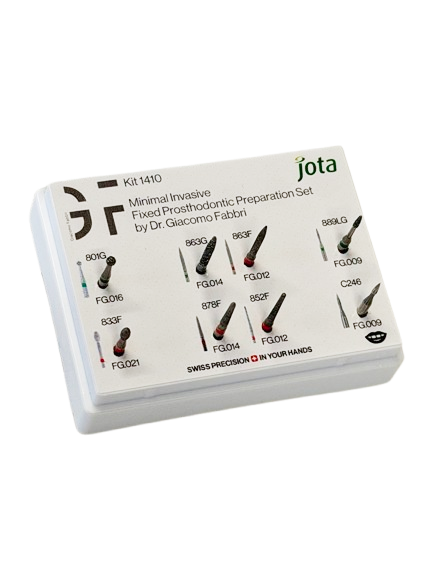
Minimal Invasive Fixed Prosthodontics Preparation Set
by Dr. Giacomo Fabbri
Minimally Invasive Fixed Prosthodontic is focused on maximizing the preservation of sound tooth structure, utilizing, all-ceramic material in minimal thickness and adhesive dentistry. This approach reduces structural weakening, pulpal damage, and periodontal issues while enhancing aesthetics through the use of materials like high-strength ceramics.
Core Concepts and Techniques
∙ Adhesive Dentistry: Relies on dentin/enamel bonding rather than
mechanical retention, allowing for non-parallel walls and smaller
preparation depths.
∙ Additive Dentistry: Focuses on adding restorative material or working
minimal thickness rather than aggressive reduction.
∙ Finishing Line preparation: Keeps preparations with juxta or above the
gingival margin, minimizing periodontal damage and allowing for easier
scan and isolation during cementations.
. Finishing Area preparation: A progressive reduction of the axial tooth
surface without a clearly defined horizontal finish line, ideal for subgingival
preparation in compromised teeth.
. Minimal Restorative Thickness: The use of monolithic restorations enables
reduced restorative thickness, promoting a more conservative tooth
preparation
Minimal Preparation Options with this kit
∙ Veneers
∙ Occlusal-Buccal Veneers
∙ Full Veneer restorations with finishing line and finishing area.
. Zi Resin-Bonded Fixed Dental Prostheses (RBFDPs): Zi Single
Retainer Maryland bridges that require minimal or no tooth reduction
for replacing missing tooth
Key Advantages
∙ Biological: Preserves residual enamel
∙ Periodontal: Avoids,when possible, subgingival margins
∙ Esthetic: Maximizes natural enamel, providing better color and transparency
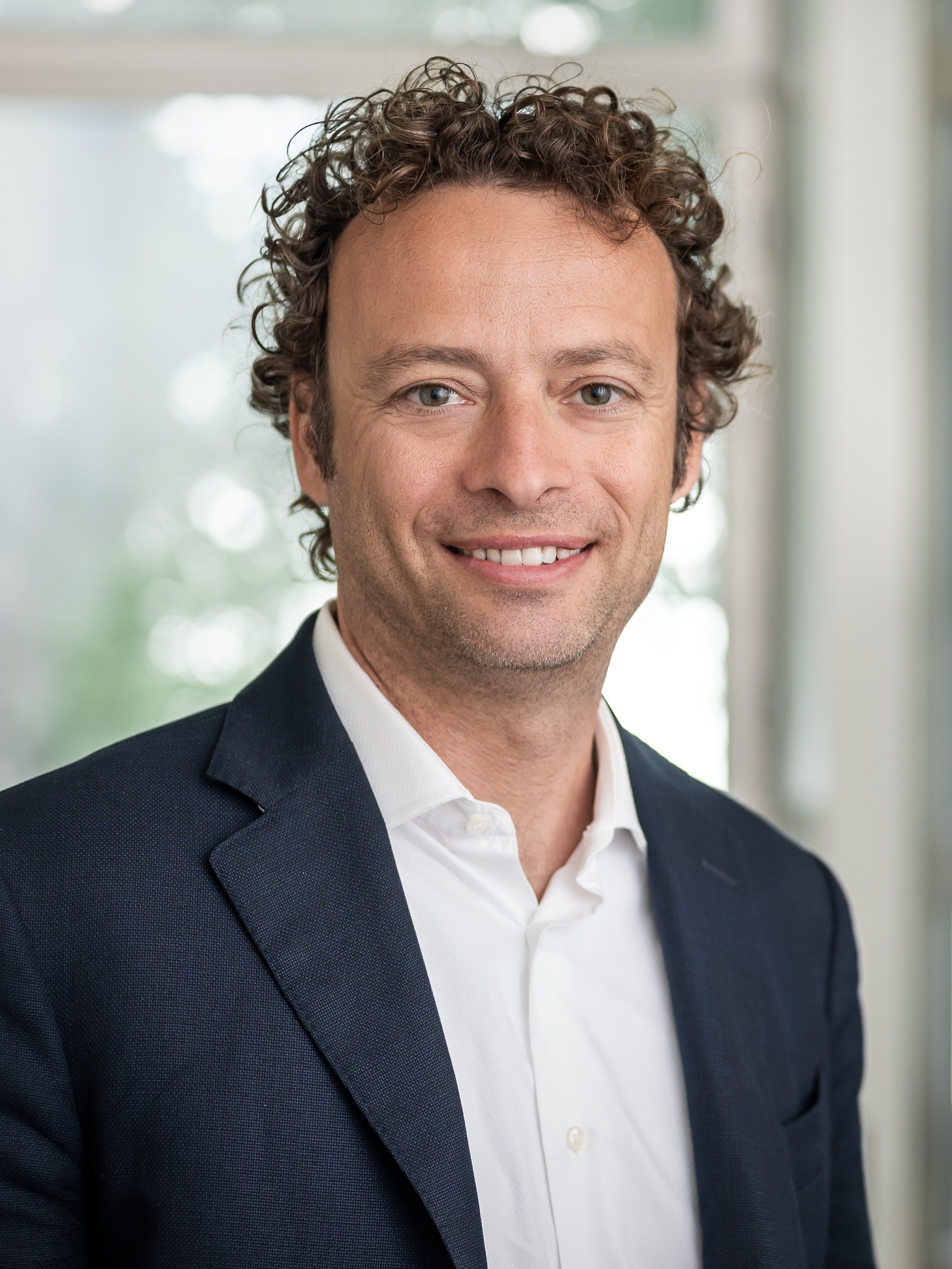
Dr. Giacomo Fabbri
He graduated with honors in Dentistry and Dental Prosthodontics from the University of Pavia in 2003. Among the various national and international programs he attended after graduation, the Master Program in Fixed Prosthodontics held by Dr. Mauro Fradeani played a significant role in his education and continues to influence his current clinical practice. In 2012, he became an Active Member of the Italian Academy of Prosthetic Dentistry (A.I.O.P.), a prestigious scientific academy in the field of esthetic and prosthetic dentistry. He has published several international articles in peer-reviewed journals in the field of prosthetic and implant dentistry. He is Adjunct Clinical Faculty at Tufts University, Boston, and Vice-Chairman of FOR (Foundation for Oral Rehabilitation). He works in Ban-Mancini-Fabbri Specialist Dental Practice, located in Cattolica (Italy).
KIT 1410
Kit for Preparing Minimally Invasive Fixed Prosthetics
Progressive Tooth Preparation Protocol
This tooth preparation concept is based on a standardized and progressive protocol that can be adapted to the specific restorative requirements while maximizing the preservation of sound tooth structure. Rather than adopting different preparation designs for different restorative solutions, the same preparation philosophy is progressively extended according to the amount of tooth structure that needs to be restored.
In the posterior region, the preparation follows a progressive sequence based on the extent of the surfaces involved: Occlusal Veneer → Occlusal-Buccal Veneer → Occlusal-Buccal/Palatal Veneer → Full-Coverage Restoration
Each subsequent design represents a progressive extension of the previous preparation, allowing the clinician to transition from a minimally invasive partial restoration to a full-coverage restoration within the same standardized preparation protocol.
The same concept can be applied to the anterior region, where the extent of tooth preparation can be progressively adapted to accommodate partial or full-coverage restorations, as well as bonded Maryland bridges.
This approach provides a single, reproducible preparation philosophy in which the extent of tooth reduction is dictated by the restorative indication, while preserving the maximum amount of residual enamel and sound tooth structure whenever clinically feasible.
Diamond instrument 801G.FG.016 (1)
Controlled occlusal/incisal reduction
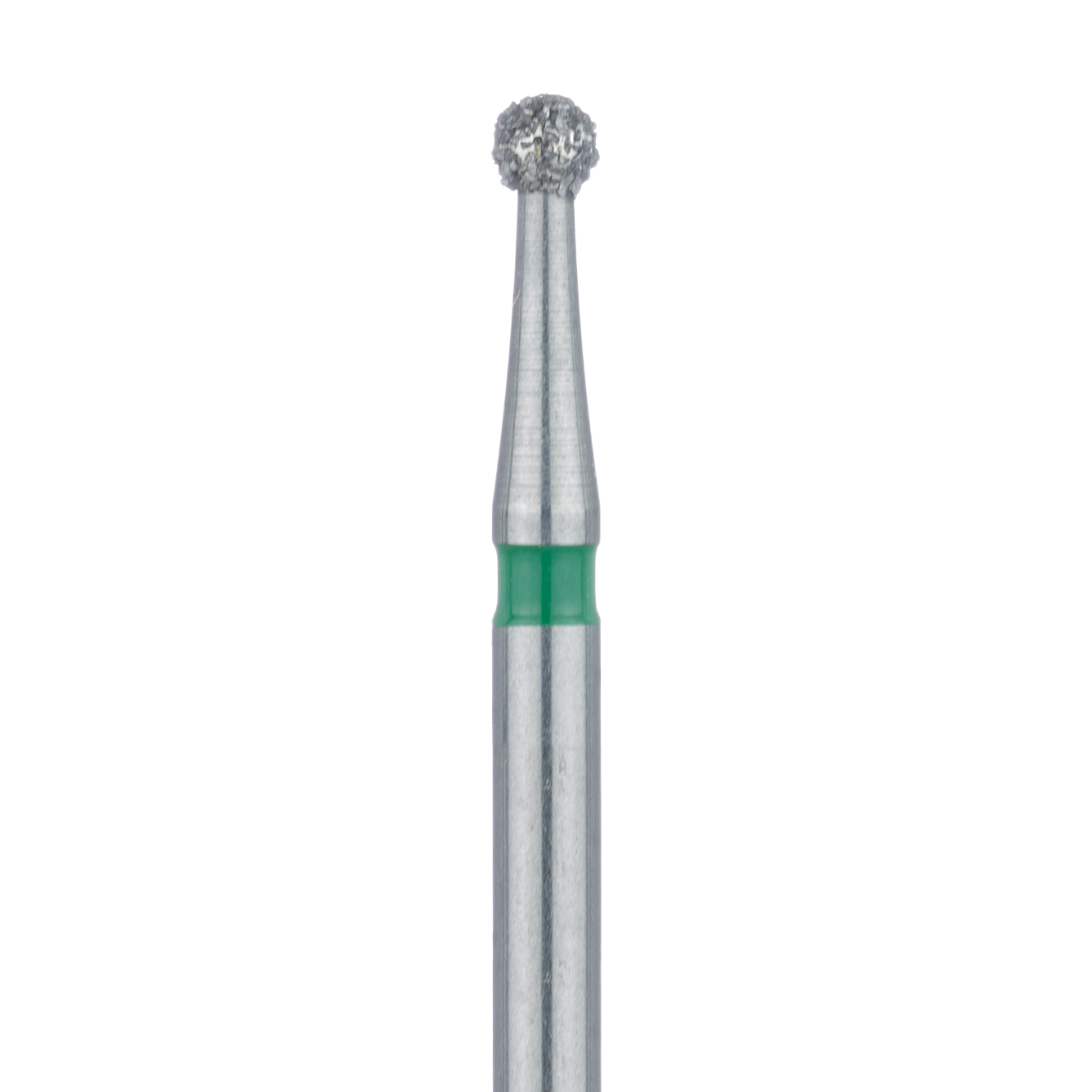
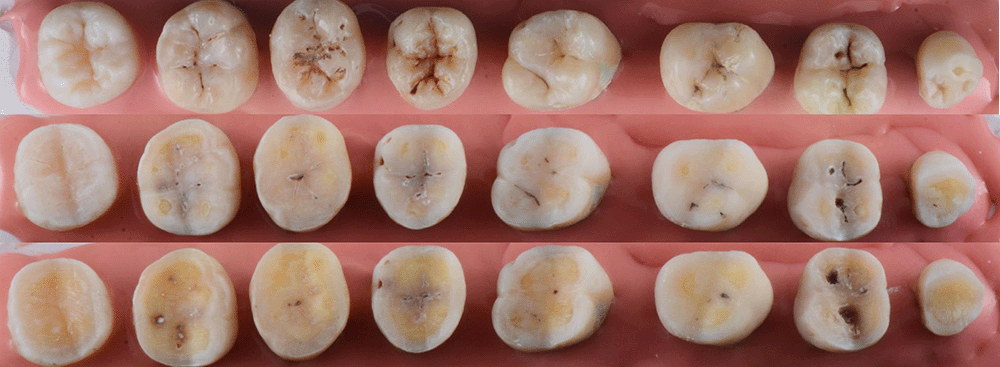
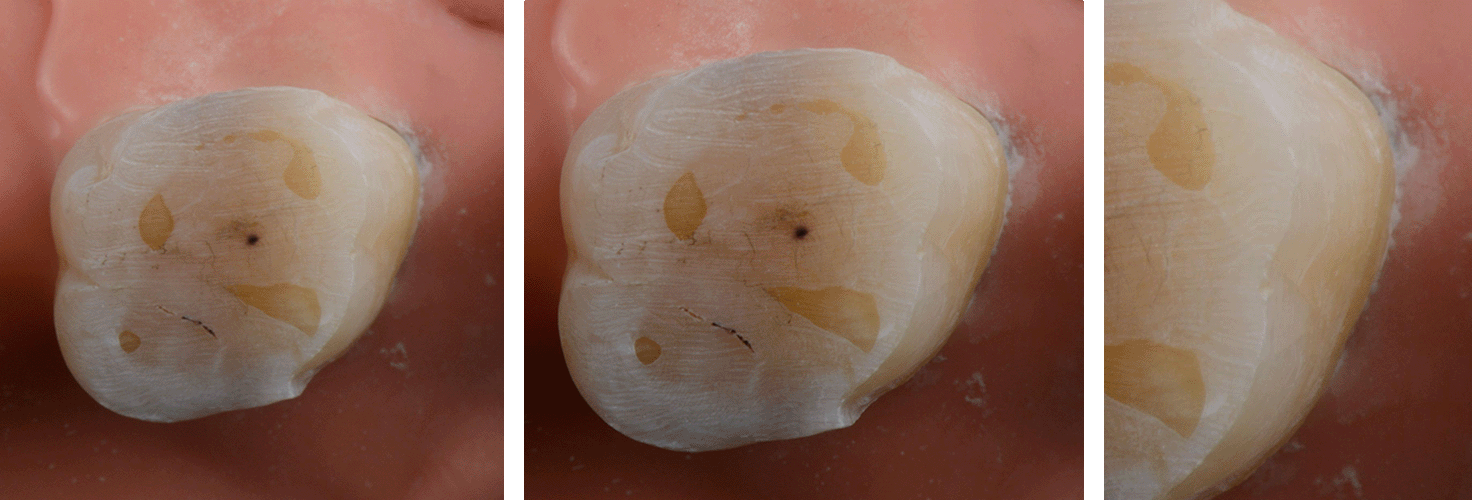
Step 1 - Natural teeth - Tooth preparation confined to the first 1 mm of tooth structure allows for substantial preservation of enamel.
Diamond instrument 833F.FG.021 (1)
Controlled occlusal/incisal reduction
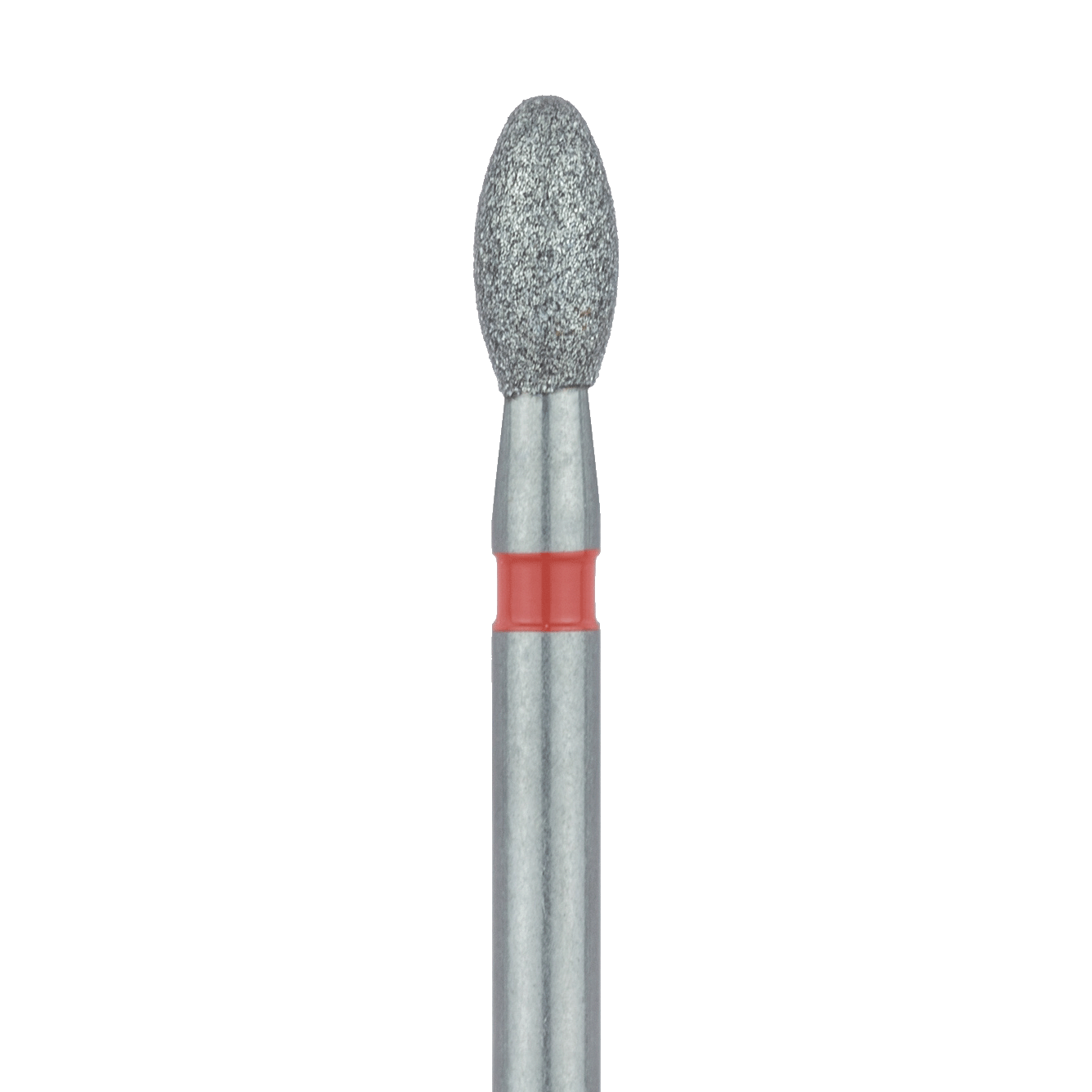
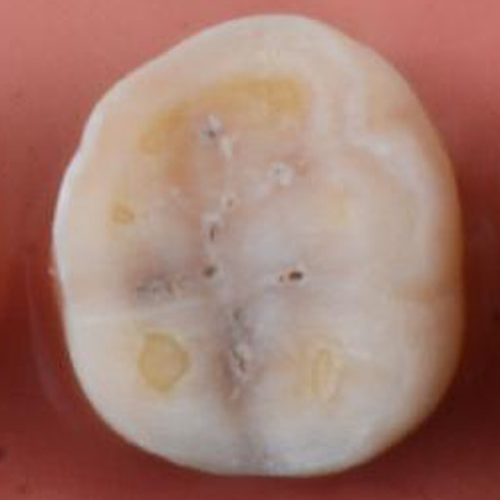
Step 1
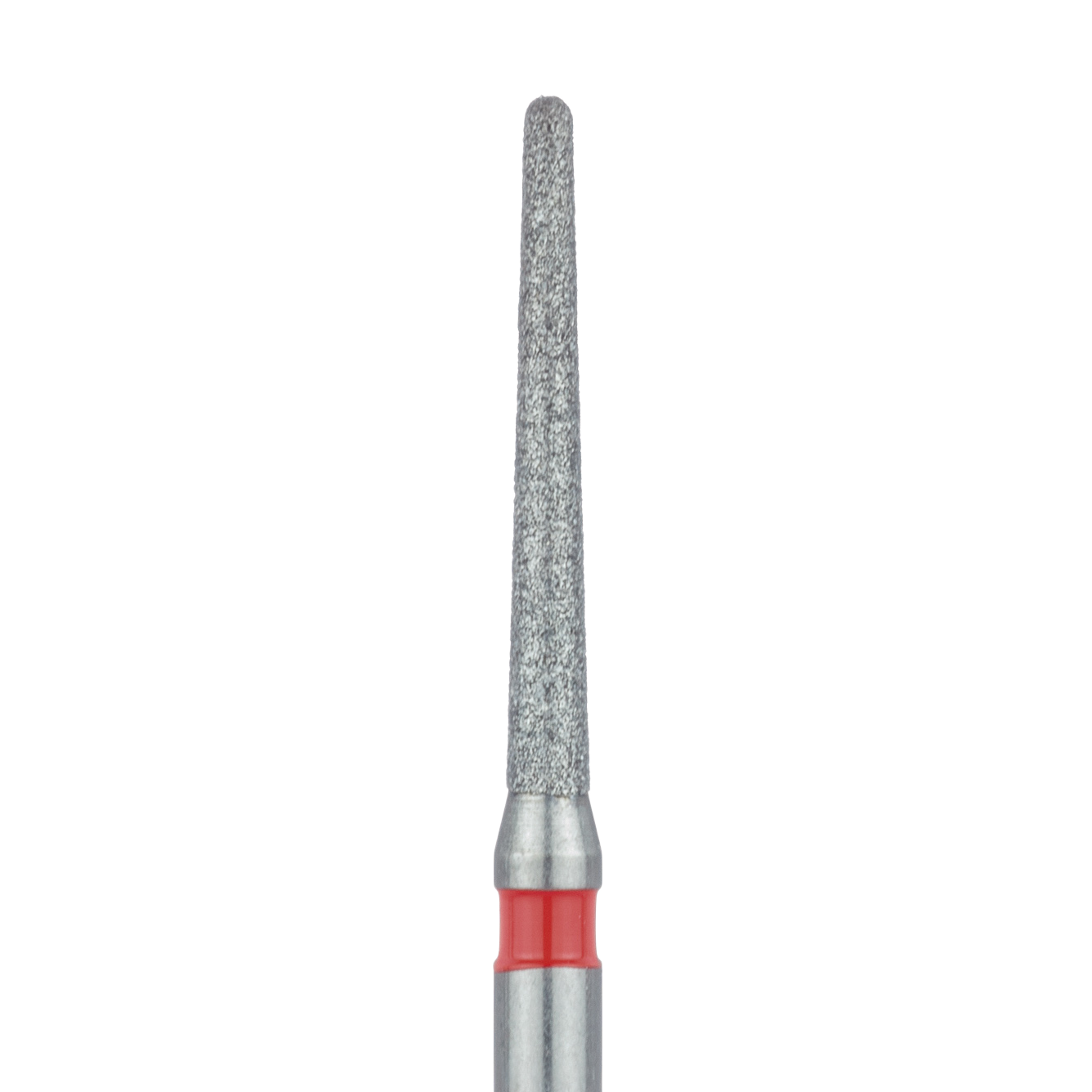
Diamond instrument 878F.FG.014 (2) (3)
Buccal Veneer Preparation (2) or
Lingual/Palatal Veneer Preparation (3)
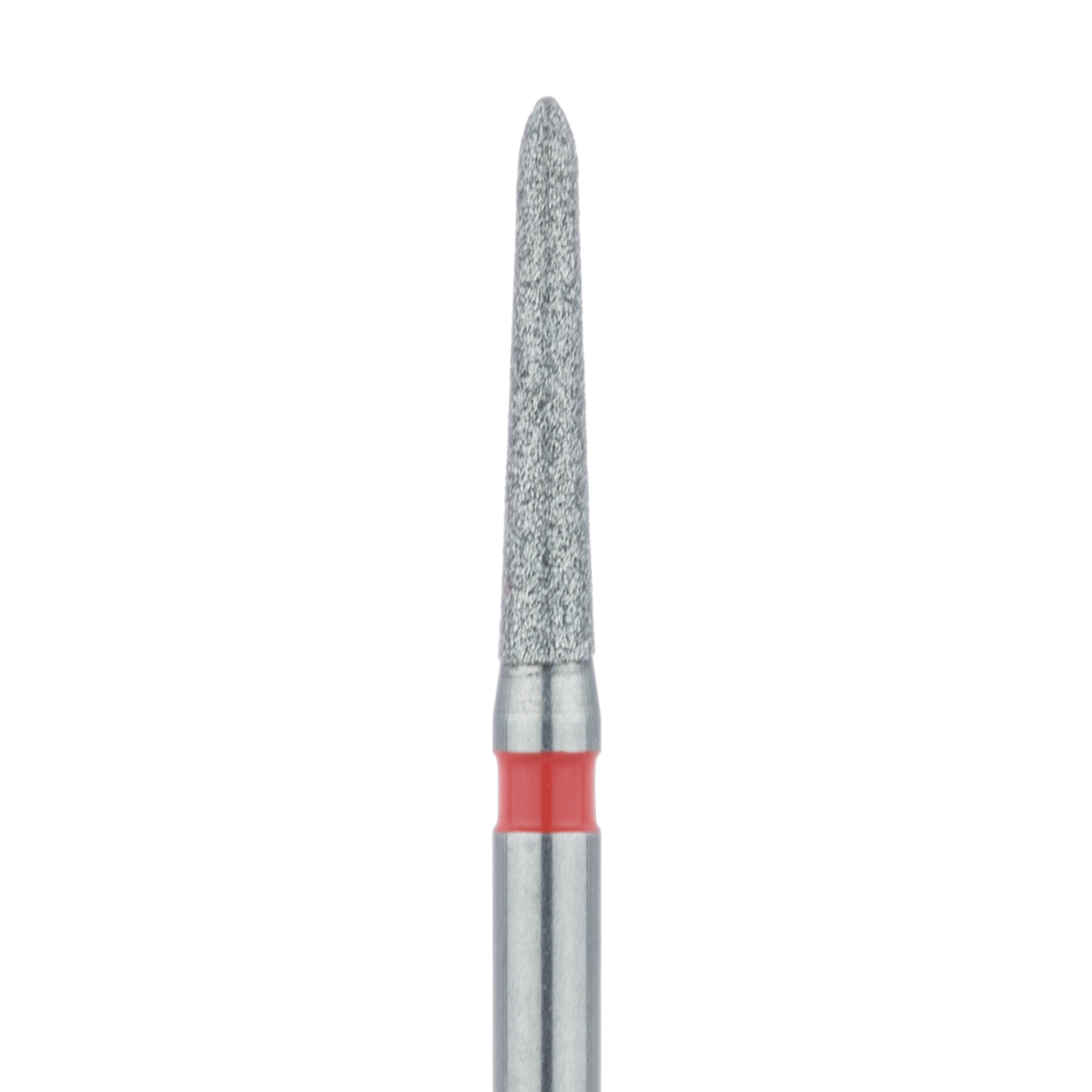
Step 2
Diamond instrument 852F.FG.012 (2) (3)
Buccal Veneer Preparation (2) or
Lingual/Palatal Veneer Preparation (3)
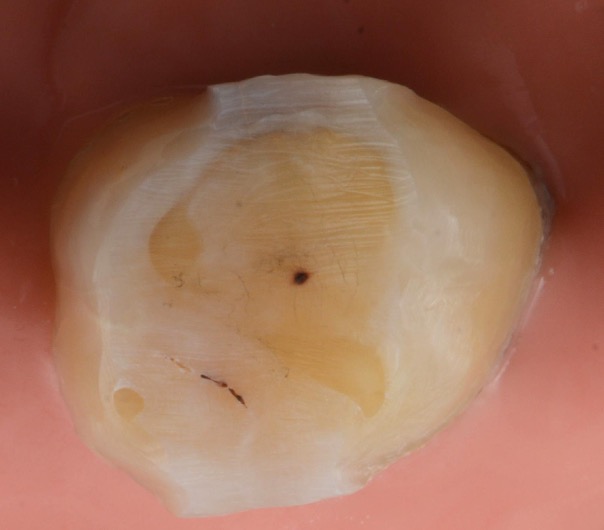
Step 3
Diamond instrument 889LG.FG.009 (4)
Remove Interproximal Contact
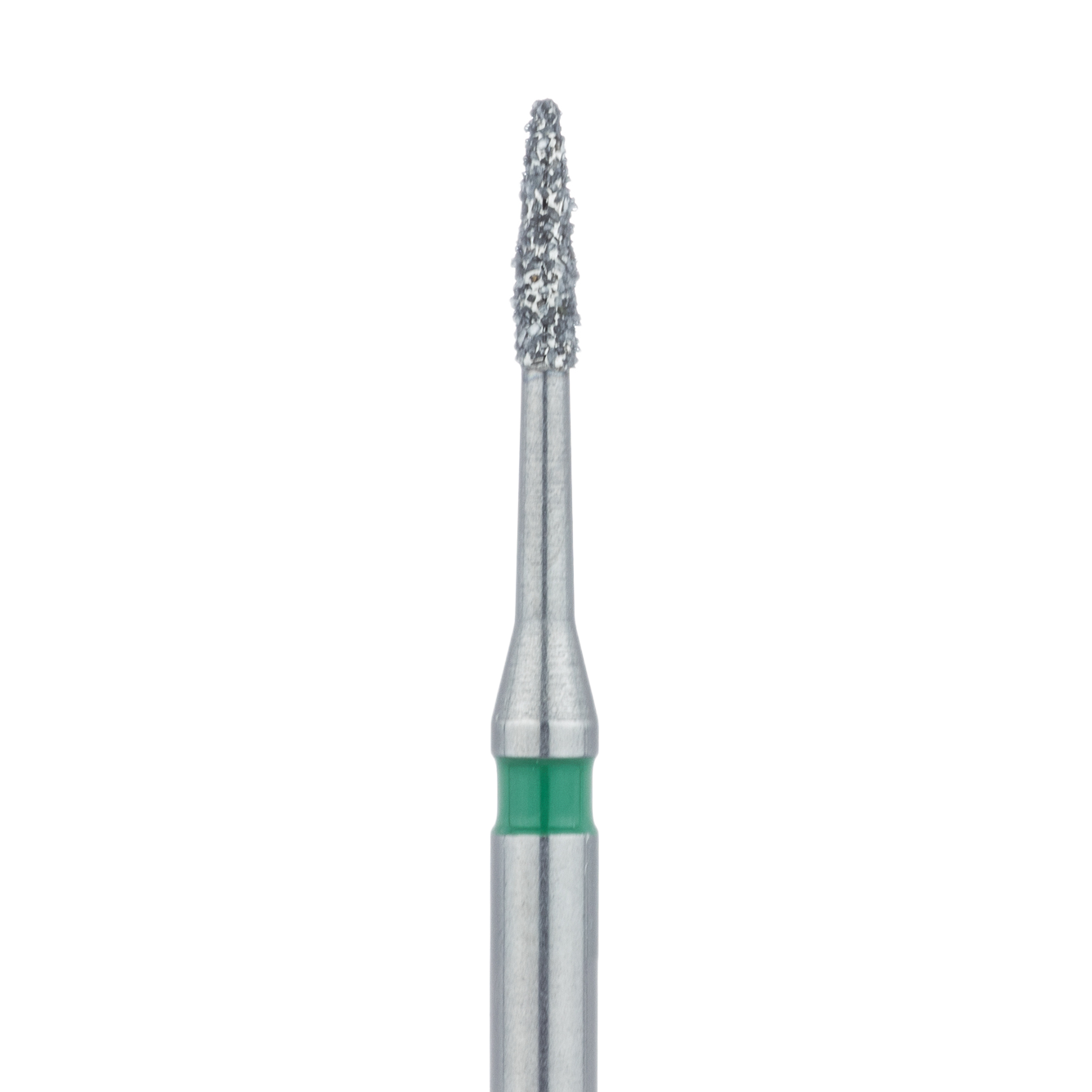
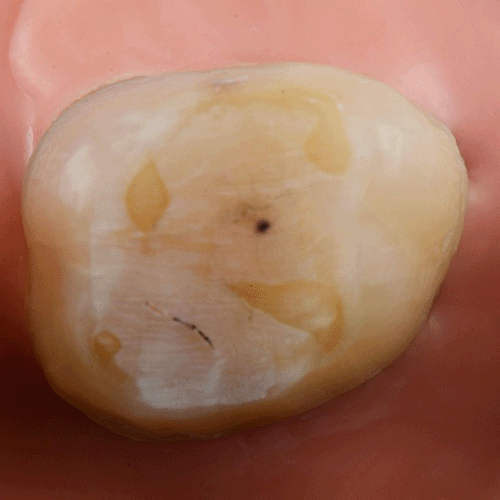
Step 4
Carbide instrument C246.FG.009 (4)
Remove Interproximal Contact

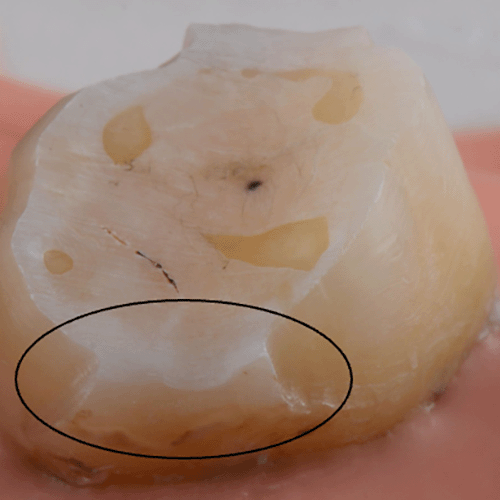
Step 4
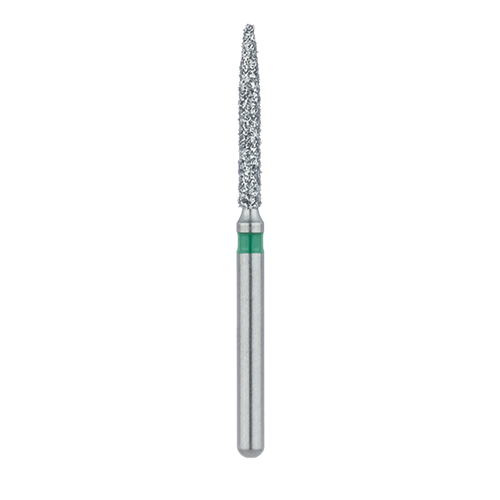
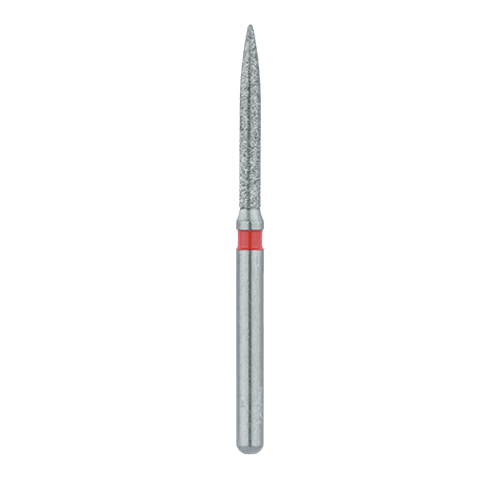
Diamond instrument 863G.FG.014 (5)
Preparation of the Finishing Area
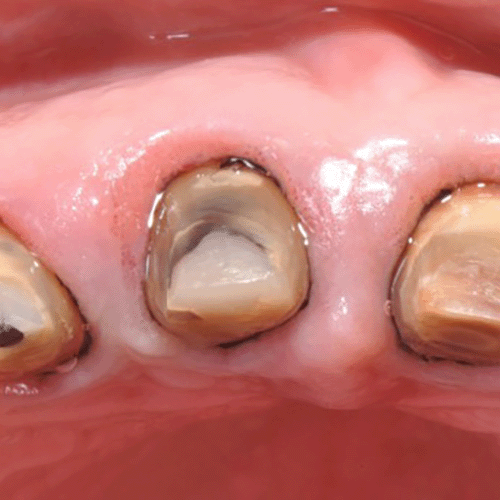
In cases of teeth with periodontal or structural damage, as well as in clinical situations that require significant changes to tooth morphology and the emergence profile, more invasive subgingival preparations may be indicated.
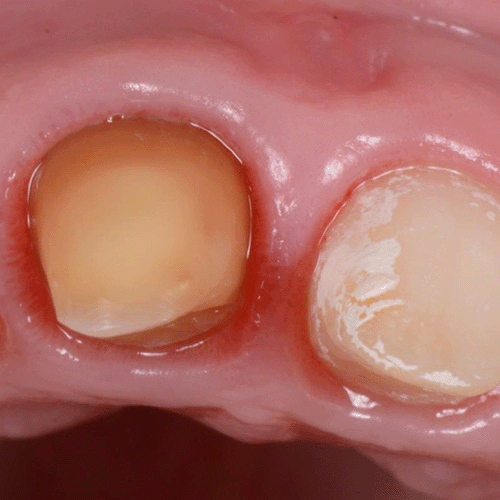
Step 5
Diamond instrument 863F.FG.014 (5)
Preparation of the Finishing Area
In this specific clinical case, the presence of deep subgingival margins was associated with compromised periodontal health. By re-preparing the affected teeth, removing the existing margin lines, and creating a new margin area, it was possible to redefine the prosthetic margins and establish a new restorative interface, which ultimately led to the restoration and long-term stability of periodontal health.
Schritt 5
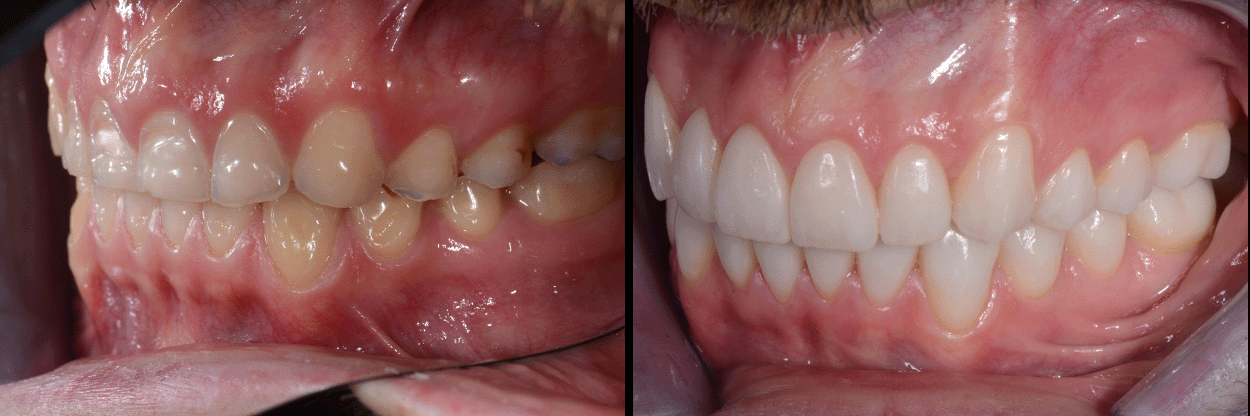
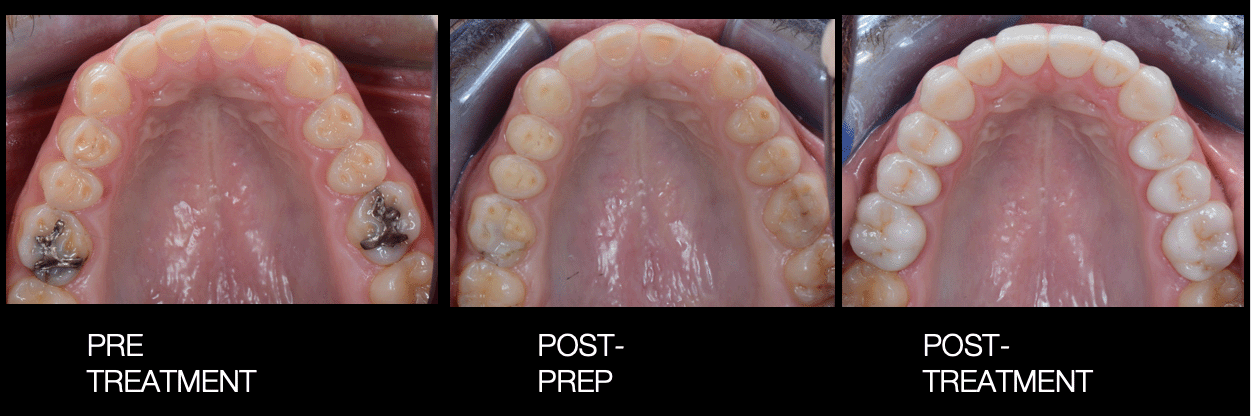
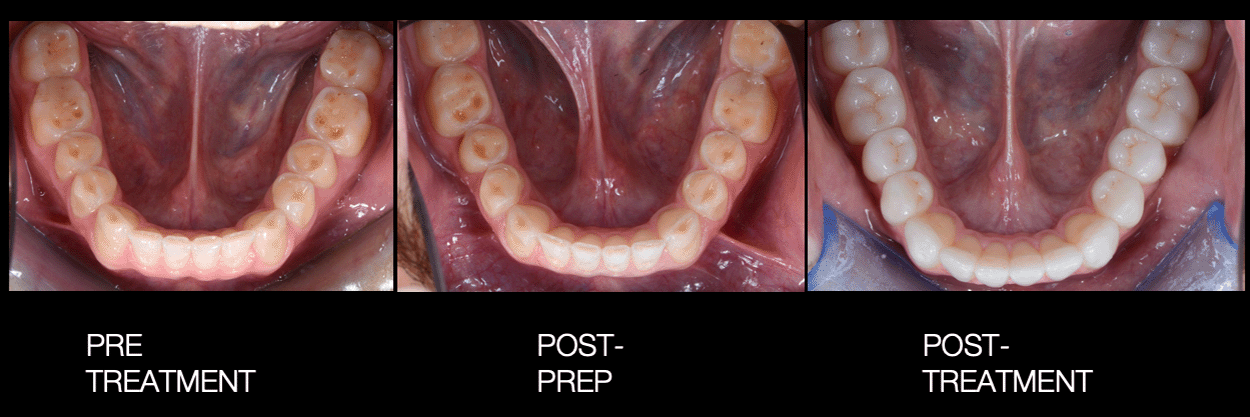
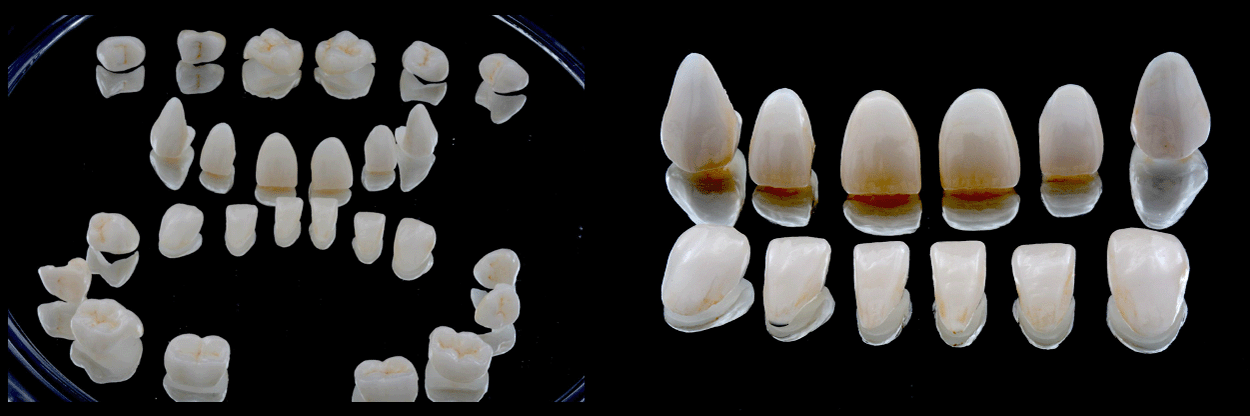
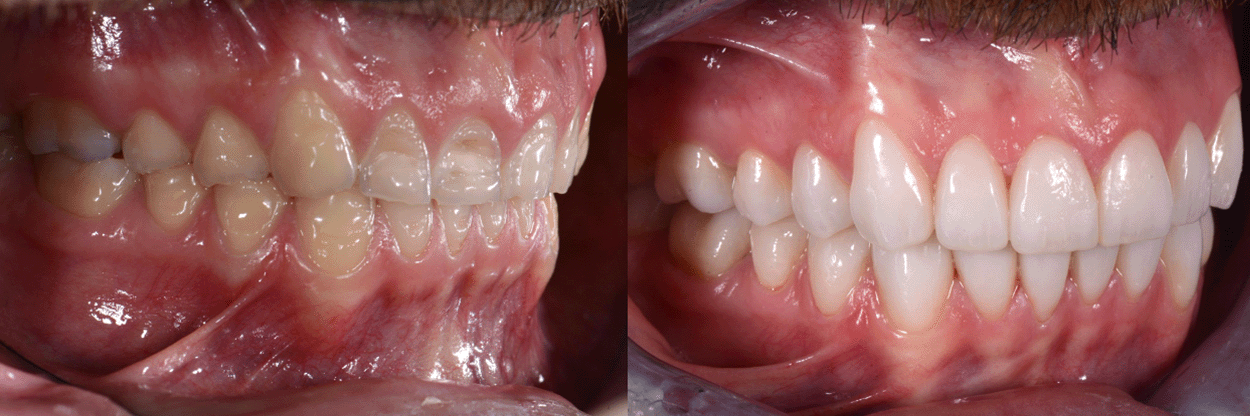
CLINICAL CASE
with severe worn dentition rehabilitated with minimal invasive restorations by using
ENAMEL-GUIDED PREPARATION TECHNIQUE (EGPT)
.
.
.
.
info?
info?
info?
info?
info?