


> INSTRUMENTS FOR VETERINARY MEDICINE
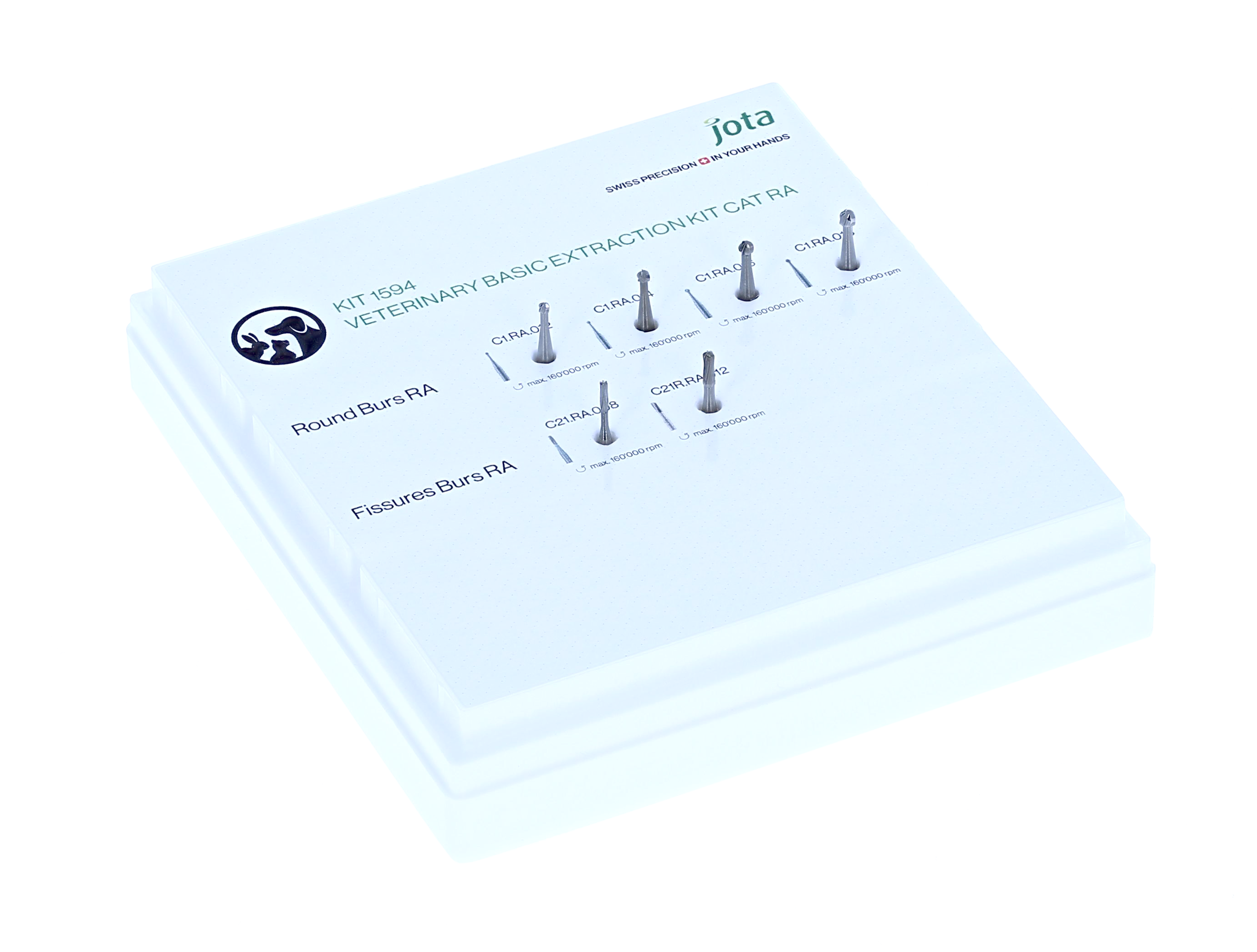
KIT 1594
Veterinary Basic Extraction
Cat RA
Specific considerations in feline exodontics require specialized solutions:
• Space and Visibility in the Feline Mouth:
The feline oral cavity presents unique anatomical challenges due to its limited working space and delicate structures. Used in a contra-angle handpiece, RA instruments offer excellent access, even in the tightest spaces. Their ergonomic design supports efficient instrument guidance and helps clinicians maintain optimal visibility.
• Protection against iatrogenic tissue damage:
Because feline teeth are small and fragile, precise instrument control is essential. While FG instruments are typically used at high rotational speeds, RA burs are designed for use in a micromotor- driven contra-angle handpiece, allowing controlled operation at lower speeds with a maximal preservation of surrounding structures
Our solution:
The JOTA Kit 1594 Veterinary Basic Extraction Cat RA adapts Swiss manufacturing precision to the highly sensitive requirements of modern feline dentistry. Coarse diamond grit was deliberately omitted from the setup. Instead, the kit relies on a finely tuned assortment of premium tungsten carbide burs. These tools were specifically selected for the filigree structures of the feline jaw to guarantee the highest degree of safety and efficiency during daily surgical challenges.
The instrument design solves the problem of extremely limited access in the feline oral cavity. The entire geometry is uncompromisingly calibrated to the tight space constraints and delicate structures of the cat. Through the consistent focus on the rightangled contra-angle shank (RA), the veterinarian gains that crucial extra bit of operating space and tactile feed-back.
Working at low speeds ensures that the risk of uncontrolled slipping is minimized, a critical protection for the highly sensitive feline soft tissue. At the same time, the fine blades of the carbide instruments feature optimized cutting behavior. They operate virtually vibration-free and prevent critical heat generation. Consequently, thermal stress on the delicate alveolar bone is consistently avoided, promoting rapid postoperative healing.
SWISS PRECISION
FOR VETERINARY MEDICINE (CAT)
ANATOMICAL REQUIREMENTS & INSTRUMENT SELECTION:
Minimally Invasive Procedures in Cats
The RA instrumentation accelerates and refines the four essential pillars of feline oral surgery through high
cutting efficiency and minimized force exertion:
• Surgical Tooth Extractions:
Carbide round burs (C1.RA) in different sizes allow highly precise and controlled alveolectomies without pressure on the delicate jaw.
• Crown Amputation:
The targeted, clean reduction of the tooth crown just below the gingival level in radiologically confirmed Type 2 Resorptive lesions.
• Tooth Sectioning:
Fragment-free, tactile sectioning of multi-rooted molar and premolar teeth using the carbide fissure burs (C21.RA, C21R.RA) prior to the actual extraction to prevent root fractures.
• Fine Bone Preparation:
Smoothing sharp bone edges (alveoloplasty) after extraction for a pain-free, rapid wound closure.
Step 1
ALVEOLAR BONE REMOVAL & CROWN AMPUTATION
CARBIDE ROUND BUR | LOW SPEED
Alveolar Bone Removal (Alveolectomy):
The RA shank in the micromotor prevents vibrations, protects the thin oral mucosa from thermal damage, and allows highly precise scalloping of the alveolar margin.
Root Smoothing & Crown amputation: In Type 2 Resorptive Lesions, where the tooth root is already replaced with bone, the tooth crown is cleanly amputated. Remaining portions are smoothened using the round burs.
Removal of the buccal alveolar bone using the appropriate round bur. Crown amputation in patients with Type 2 Resorptive Lesions.
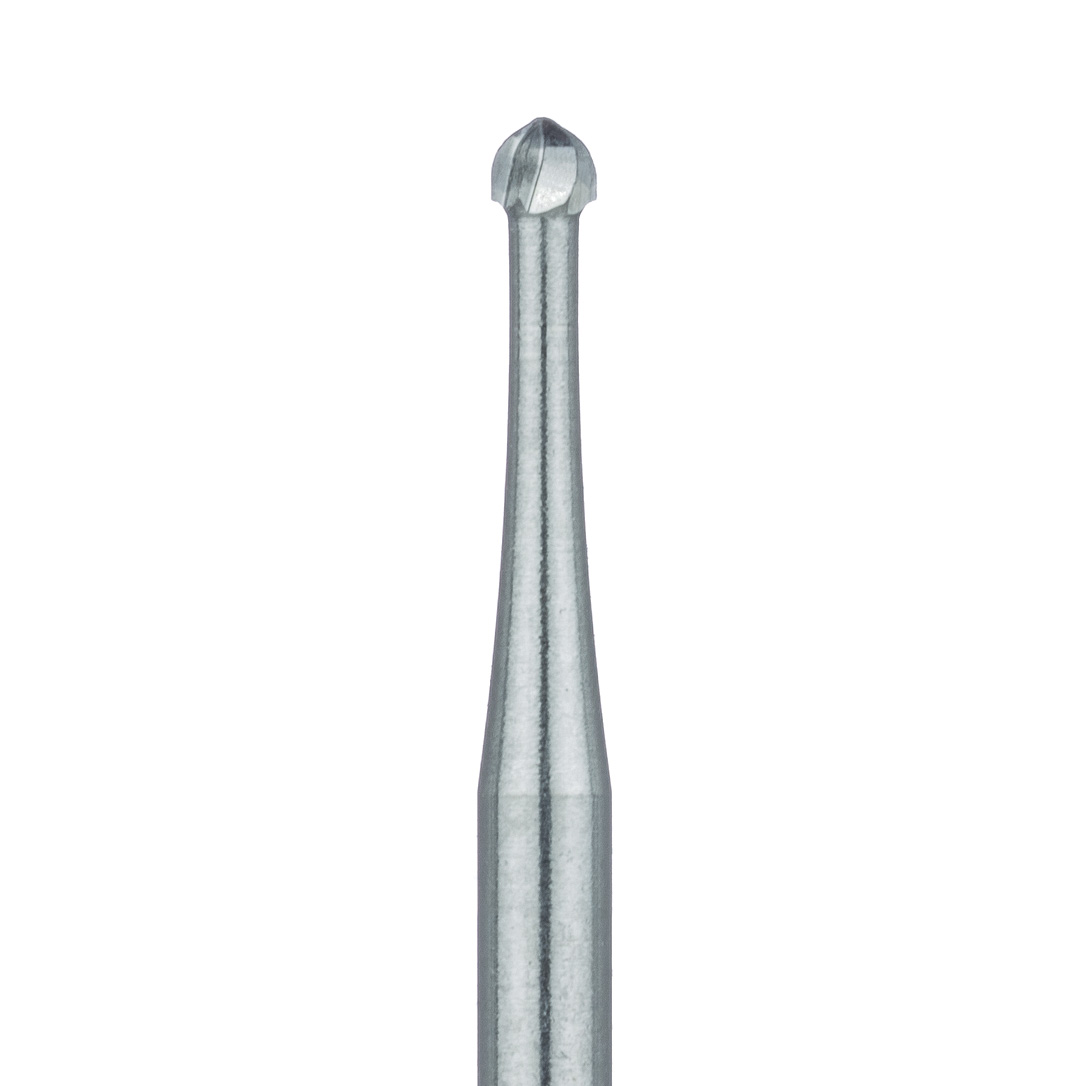
Carbide Instrument
C1.RA.012
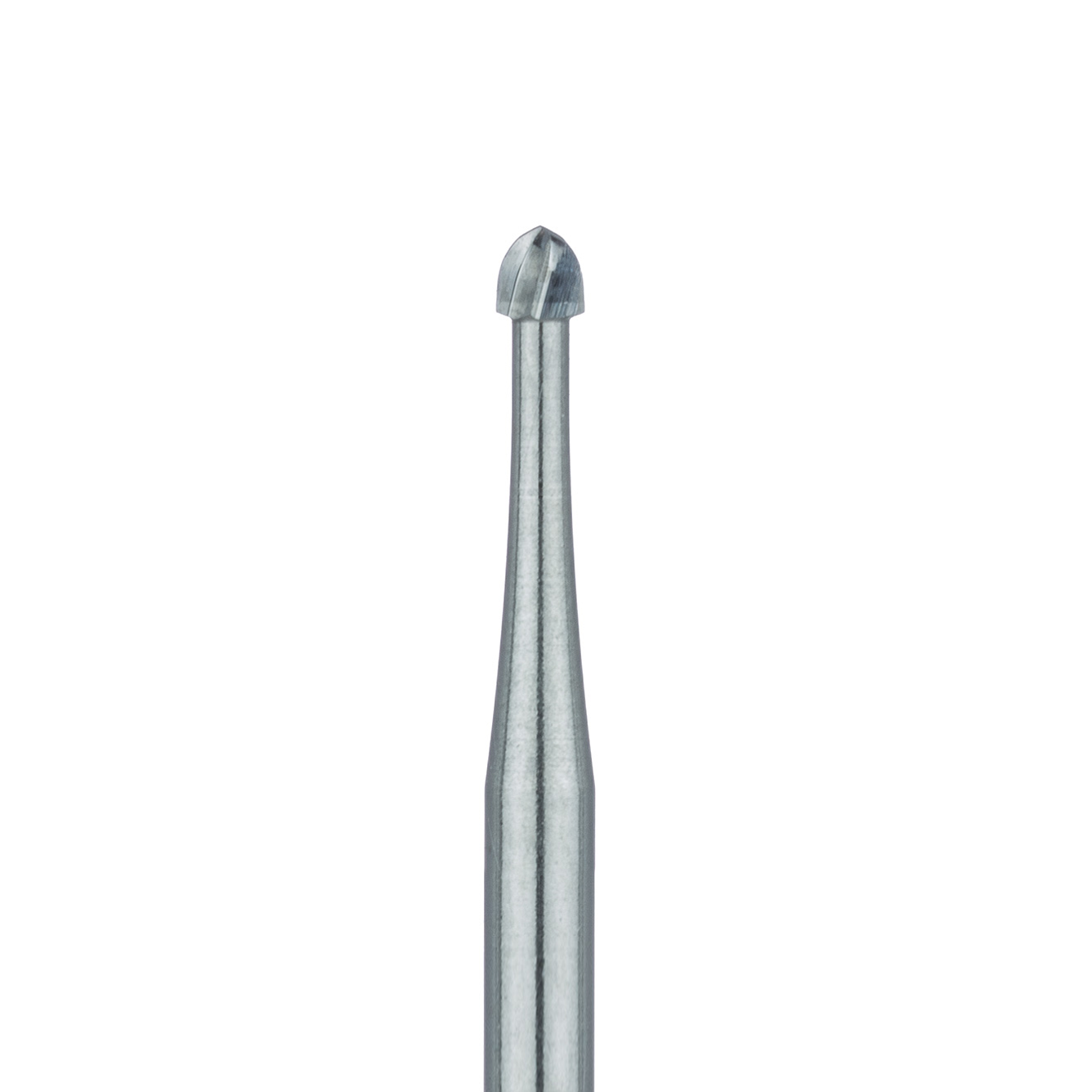
Carbide Instrument
C1.RA.014
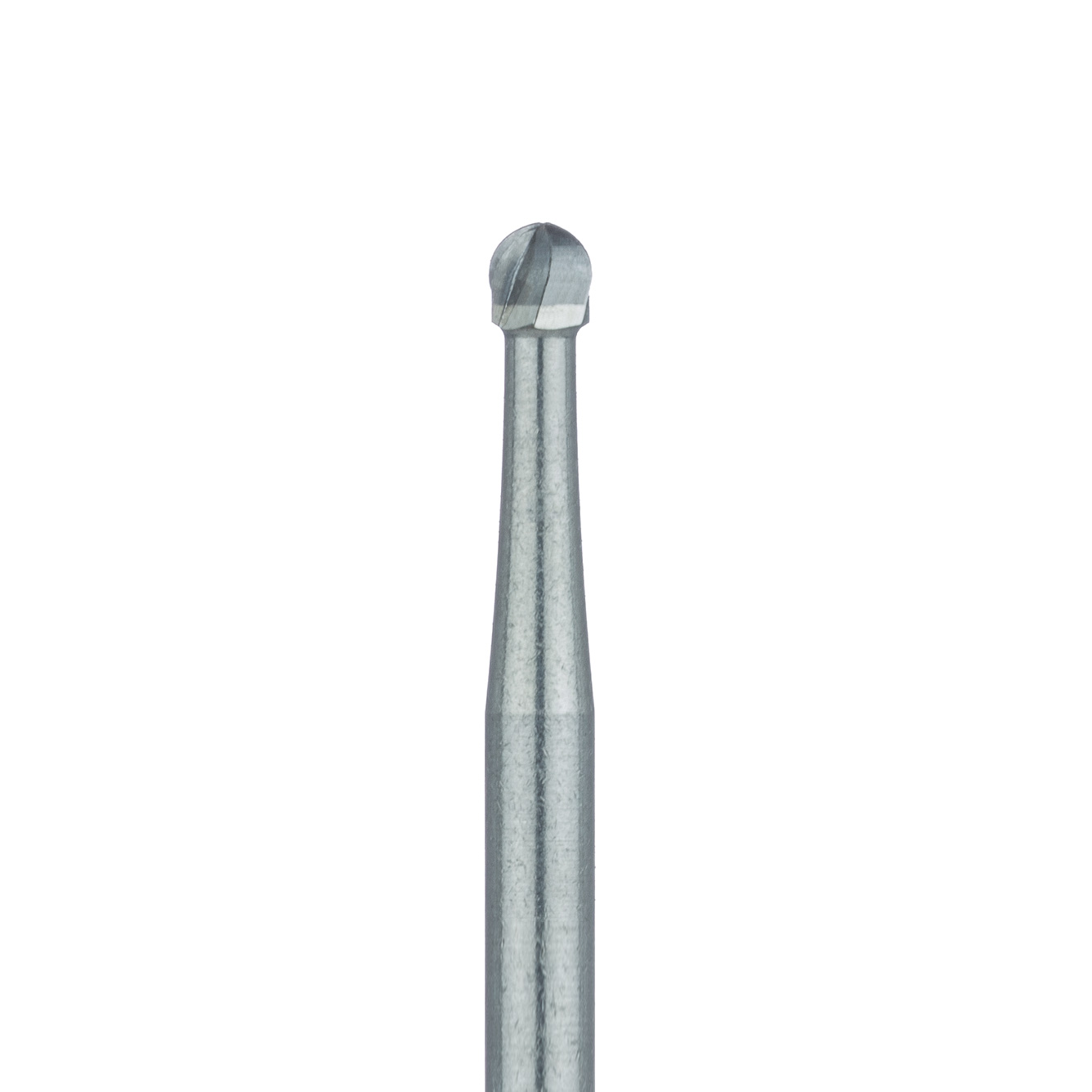
Carbide Instrument
C1.FG.016
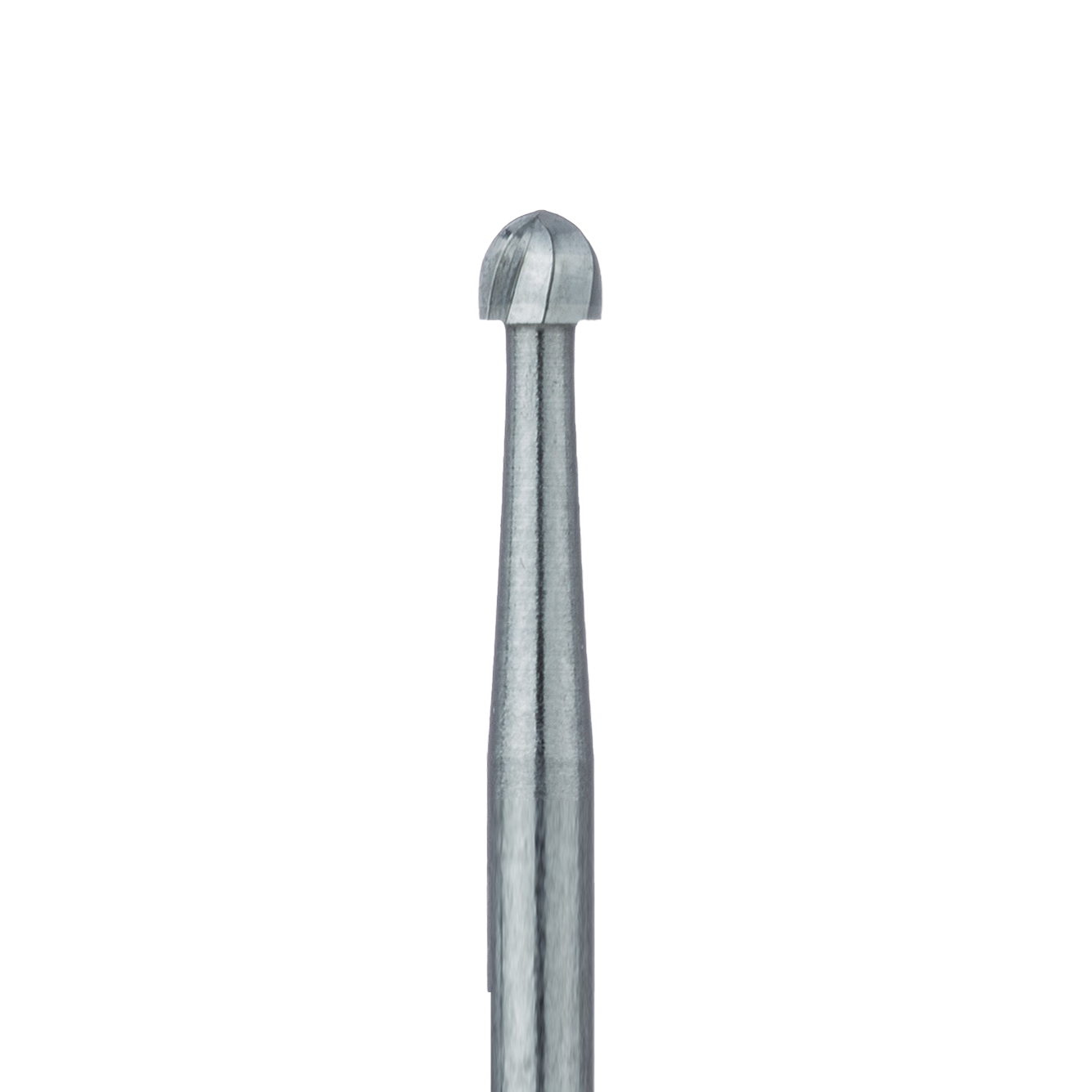
Carbide Instrument
C1.FG.018
Step 2
ROOT DIVISION (ODONTOTOMY)
CARBIDE FISSURE BURS & TAPERED BURS
Carbide instrument for precise segmentation of Feline molar and premolar multi-rooted teeth. The low speed
of the RA system gives the veterinarian the necessary tactile feedback to separate the tooth completely without
perforating the underlying bone.
Specialized Geometries: Pointed ends (C21R.RA.012) allow advancement precisely to the bifurcation (furcation) of the tooth root without jamming.
Position the fissure bur at the furcation of multi-rooted teeth. Cleanly section the crown through to the interradicular space.
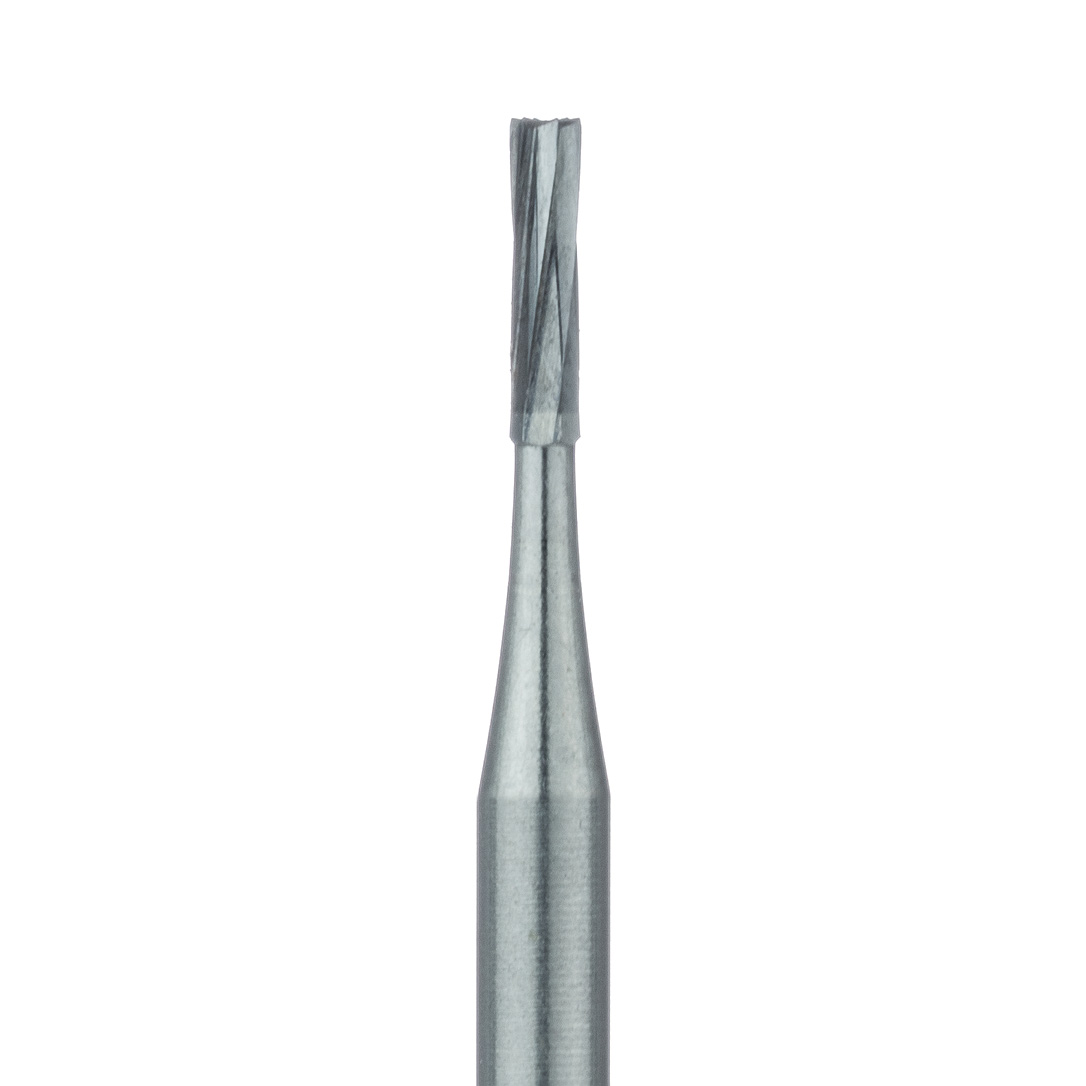
Carbide Instrument
C21.RA.008
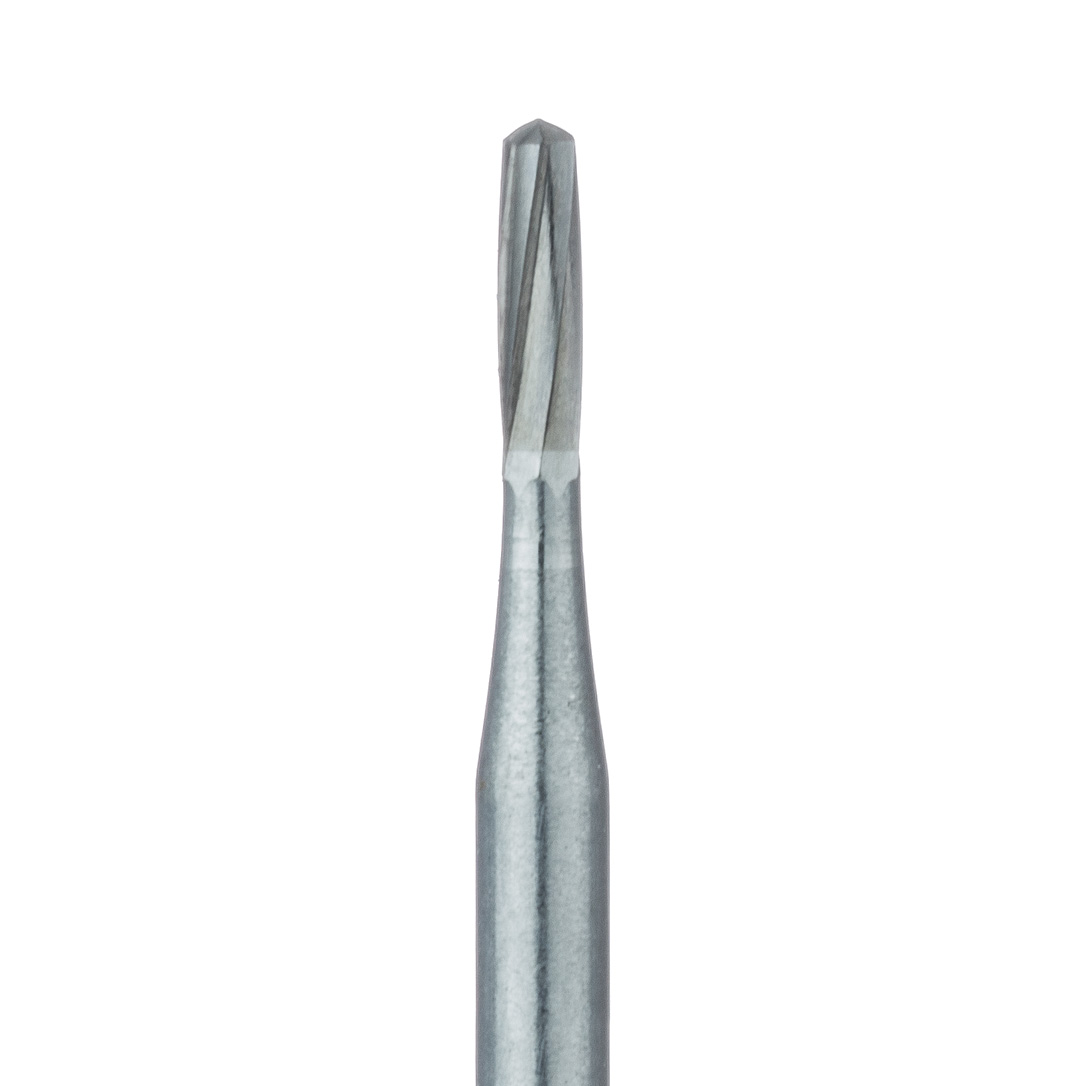
Carbide Instrument
C21R.RA.012