


> INSTRUMENTS FOR VETERIARY MEDICINE
KIT 1593
Veterinary Basic Extraction
Cat FG
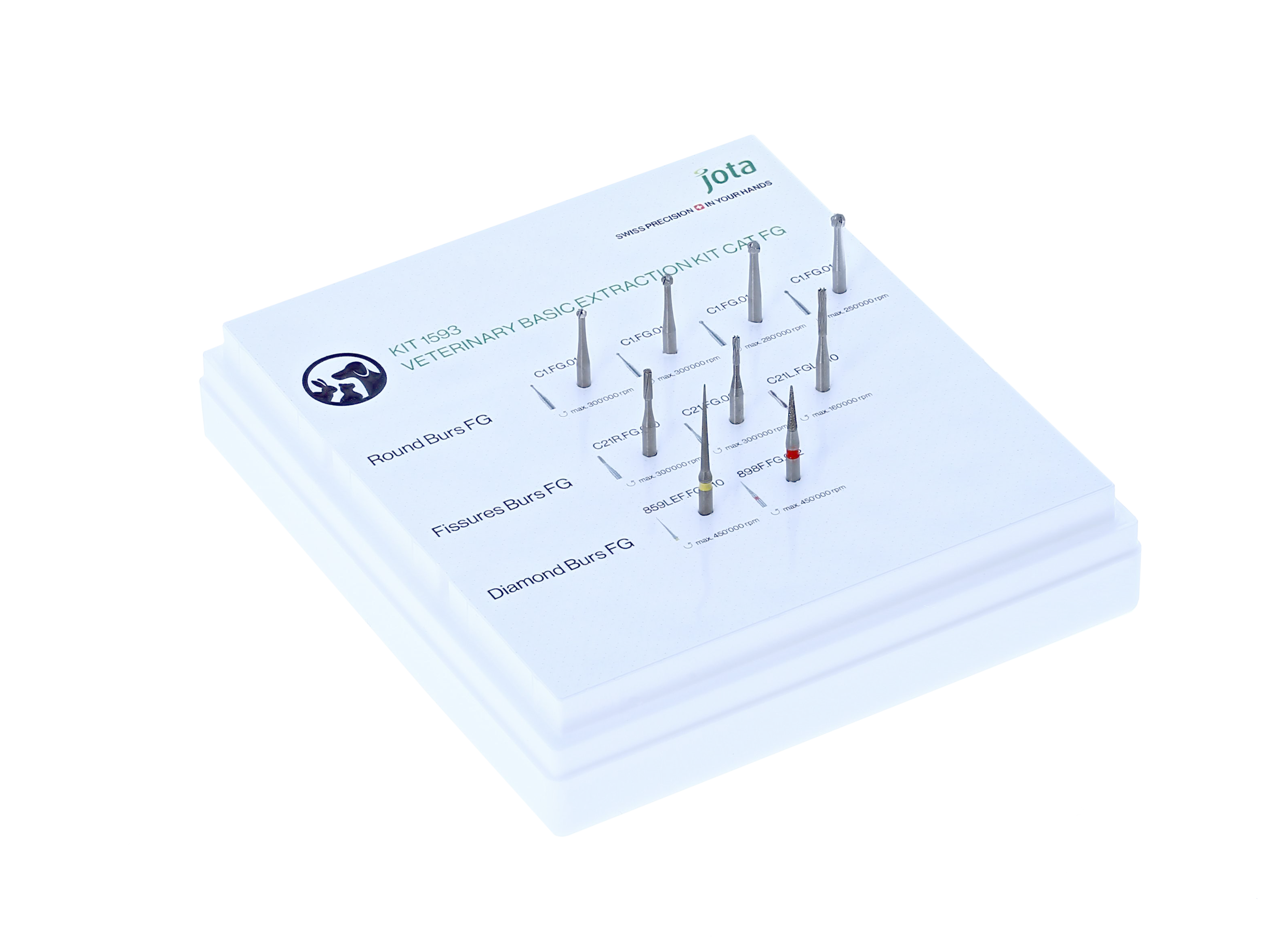
Specific considerations in feline exodontics require specialized solutions:
• Delicate feline anatomy:
Rotary tools with a shortened shank compensate for anatomical tightness by minimizing the space required by the handpiece inside the mouth. This provides an unobstructed view of the surgical field and optimal working space for precise, safe, and tissue-preserving procedures.
• The destructive process of tooth resorption:
Tooth resorption (TR) formerly referred as FORL, is one of the most common indications for tooth extractions in cats. Weakness of the tooth substance and tight or absent periodontal space are particular challenges in feline extractions. This transition is optimally managed by combining two instrument classes. Root preparation and tooth segmentation are performed using carbide burs. The final preparation shifts into the fine-grit diamond burs. This allows an extremely precise bone removal to avoid fractures and to preserve adjacent tooth roots and surrounding soft tissue structures.
Our solution:
The JOTA Kit 1593 Veterinary Basic Extraction Cat FG translates Swiss manufacturing quality to the high-speed segment. It comes into play where the combination of extreme tissue preservation and time efficiency in the operating room is required.
The technological foundation is formed by FG (Friction Grip) shanks. They guarantee an absolutely centered fixation inside the handpiece head, which imparts exceptional smooth-running characteristics to the instruments even at maximum rotation.
This stability allows the veterinarian to control the highly efficient cutting performance of high-speed driveswith micrometer precision. This design enables extremely rapid, low-vibration removal of hard tooth substance. The highly efficient substance removal noticeably shortens the treatment duration in the operating room, which in turn significantly reduces anesthesia time for the feline patient.
While the precisely engineered carbide bur geometries allow efficient cutting of tooth structure with minimal pressure, bone preparation follows a different principle. Fine-grit diamond burs enable gentle and controlled bone removal at high rotational speeds of up to 300,000 rpm.
Their smooth gliding action minimizes the need for mechanical pressure, helping to reduce localized heat generation and preserve vital bone tissue, thereby supporting favorable conditions for wound healing.
SWISS PRECISION
FOR VETERINARY MEDICINE (CAT)
ANATOMICAL REQUIREMENTS & INSTRUMENT SELECTION:
Minimally Invasive Procedures in Cats
Die FG-Instrumentierung beschleunigt und optimiert die vier wesentlichen Säulen der Oralchirurgie bei Katzen durch hohe Schneidleistung und minimalen Kraftaufwand:
• Chirurgische Zahnextraktionen:
Der runde Hartmetallbohrer (C1.FG) ermöglicht minimalinvasive Alveolektomien, um einen geraden Zugang zur Zahnwurzel zu schaffen, was den schonenden Einsatz von Luxatoren erlaubt.
• Vollmund-Extraktionen:
Bei chronischer Gingivitis-Stomatitis bei Katzen (FCGS) ist die Vollmund-Extraktion ein häufig durchgeführter Eingriff. Alle Zahnwurzeln müssen unter maximaler Erhaltung des umgebenden Knochens freigelegt werden. Dazu werden Hartmetall-Rundbohrer (C1.FG) und Diamantbohrer (859LEF.FG/898F.FG) für die abschließende Präparation und Glättung scharfer Alveolarränder verwendet, um eine postoperative Lappenperforation zu verhindern.
• Kronenamputation:
Bei röntgenologisch bestätigten resorptiven Läsionen vom Typ 2 erfolgt die horizontale Substanzreduktion unterhalb des Zahnfleischrandes äußerst schnell und minimalinvasiv.
Zahnsektionierung:
Die schnelle, fragmentfreie Trennung mehrwurzeliger Prämolaren und Molaren mithilfe der Hartmetall-Fissurenbohrer (C21R.FG/C21.FG/C21L.FGL) verhindert unkontrollierte Wurzelschäden.
Für alle anatomischen Anforderungen stehen verschiedene Größen und Formen zur Verfügung.
Step 1
ALVEOLAR BONE REMOVAL & CROWN AMPUTATION
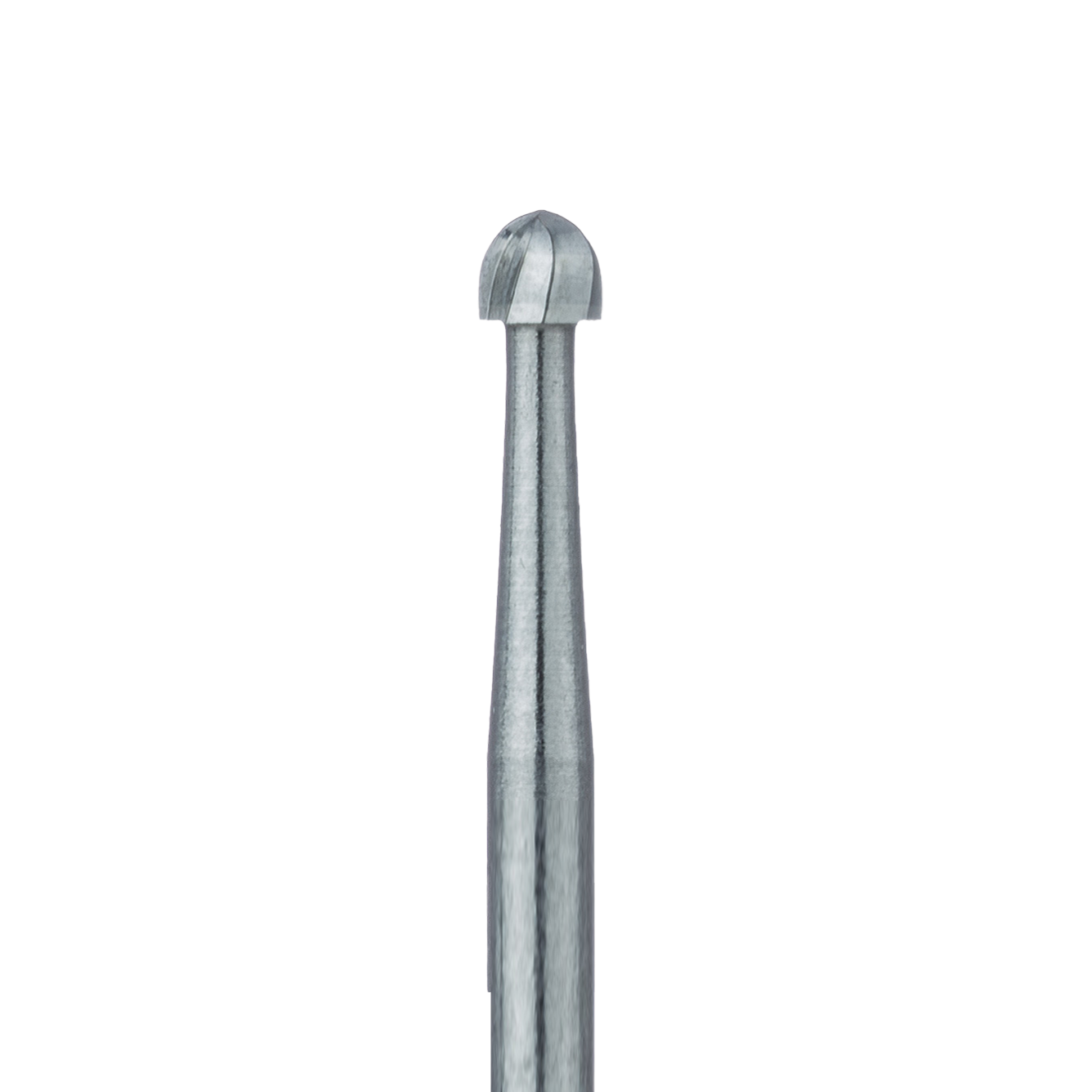
CARBIDE ROUND BURS FG
Alveolar Bone Removal (Alveolectomy): Rapid and controlled removal of the surrounding jawbone to expose the tooth root. This efficiently creates the necessary space to safely position a leverage instrument (luxator).
Root Smoothing & Crown Amputation: In Type 2 Resorptive Lesions, where the root is already replaced with the bone (ankylosis), the tooth crown is cleanly amputated. Remaining portions are quickly smoothed using the round
burs.
Removal of the buccal alveolar bone using the appropriate round bur.
Crown amputation in patients with Type 2 Resorptive Lesions.
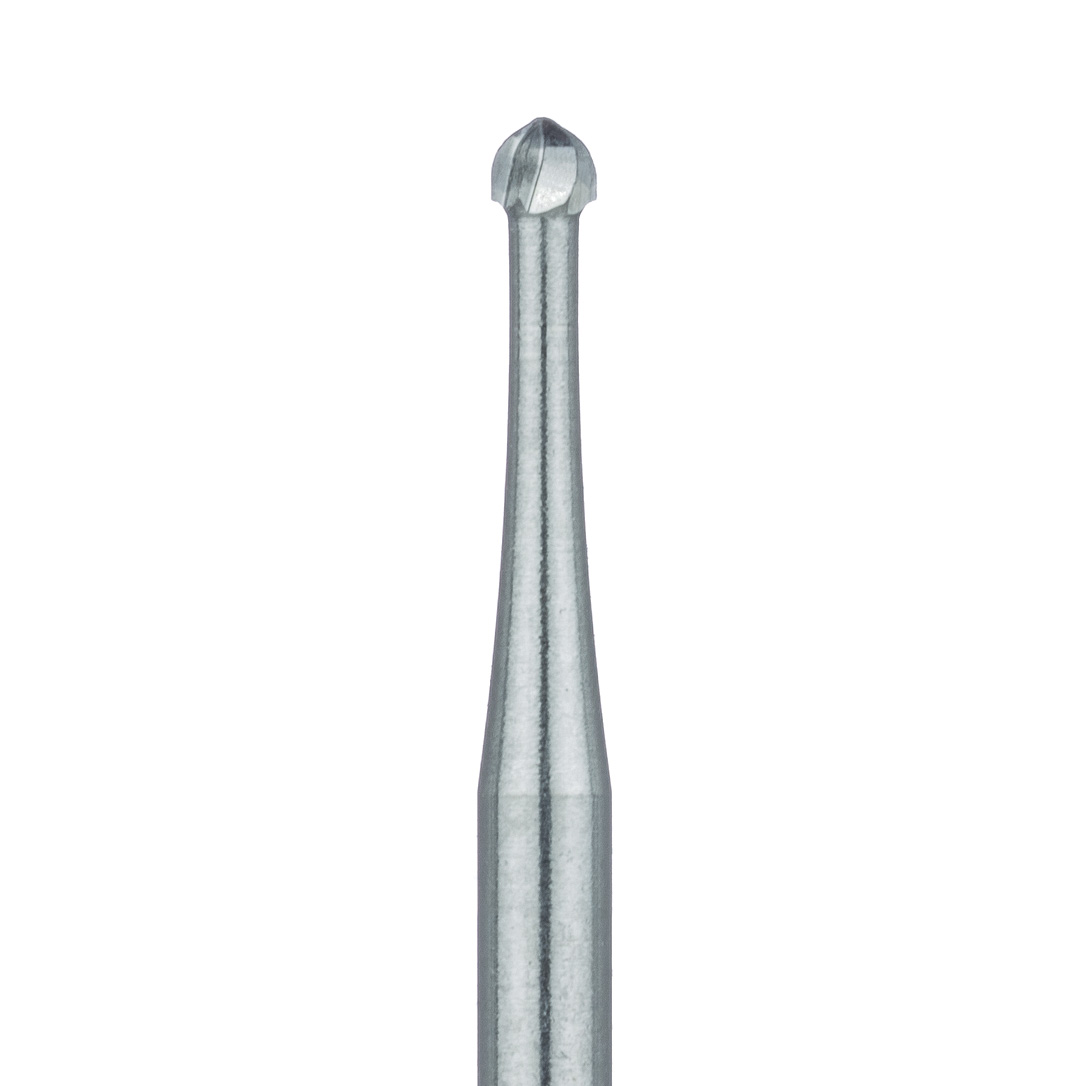
Carbide instrument
C1.FG.012
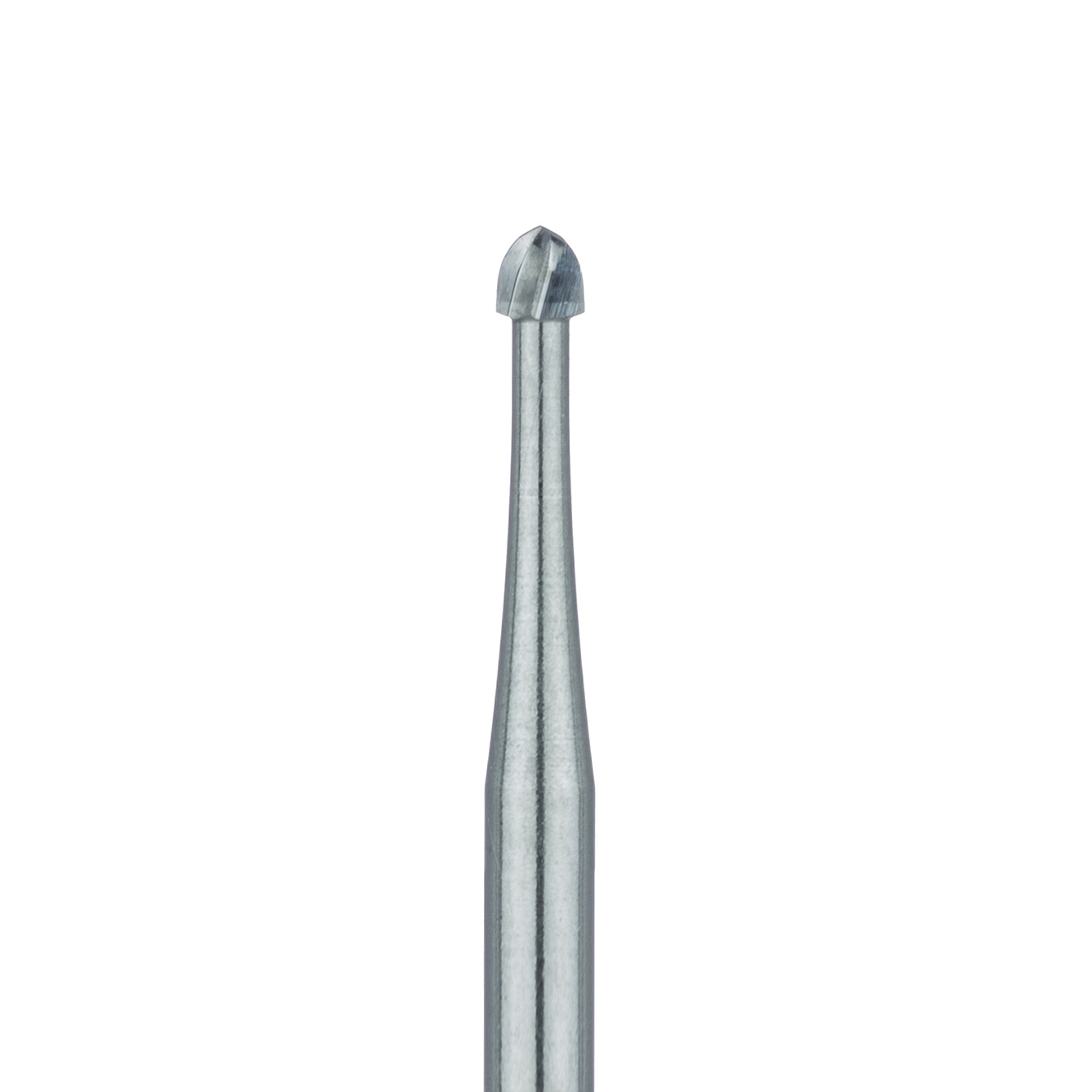
Carbide instrument
C1.FG.014
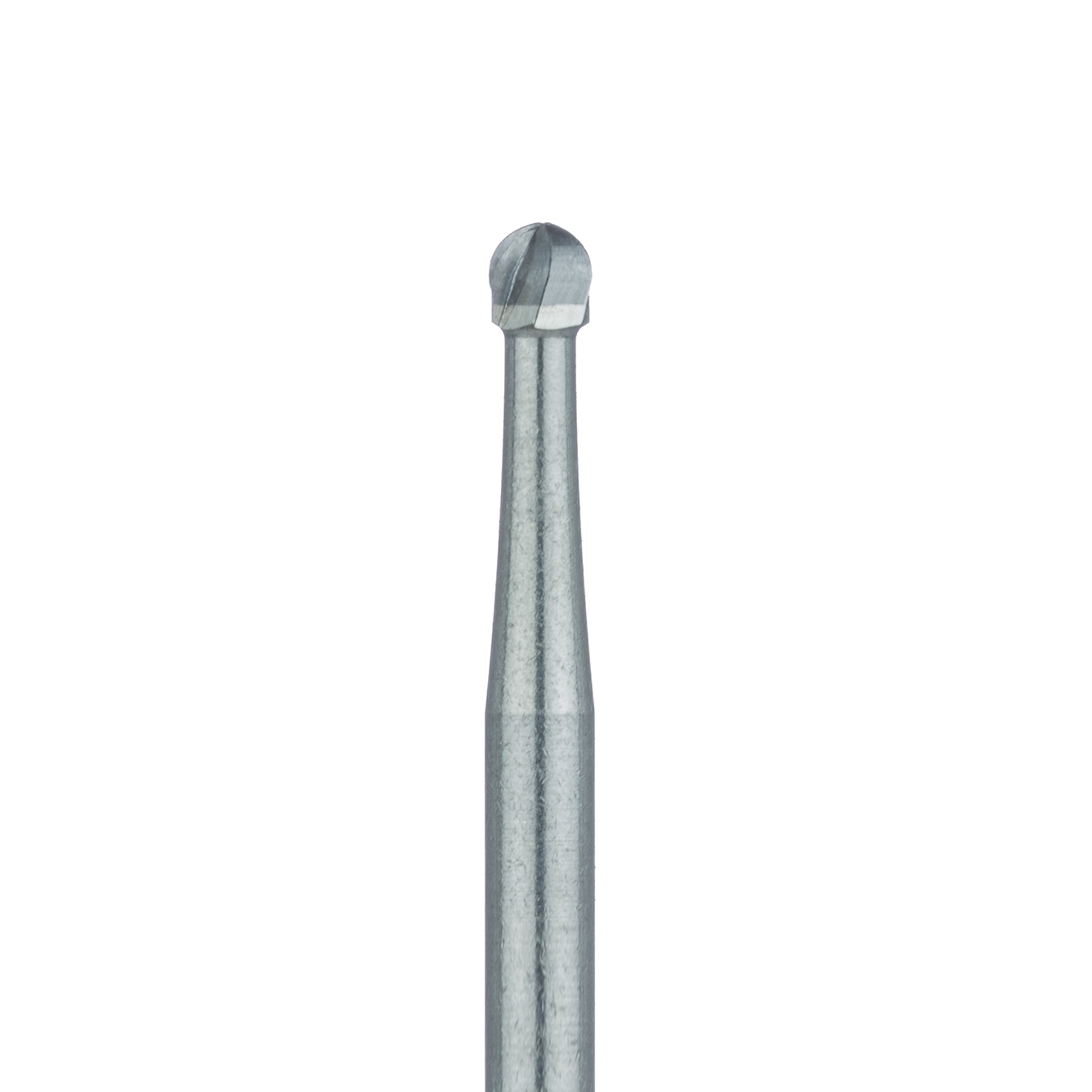
Carbide instrument
C1.FG.016
Carbide instrument
C1.FG.018
Step 2
ROOT DIVISION (ODONTOTOMY)
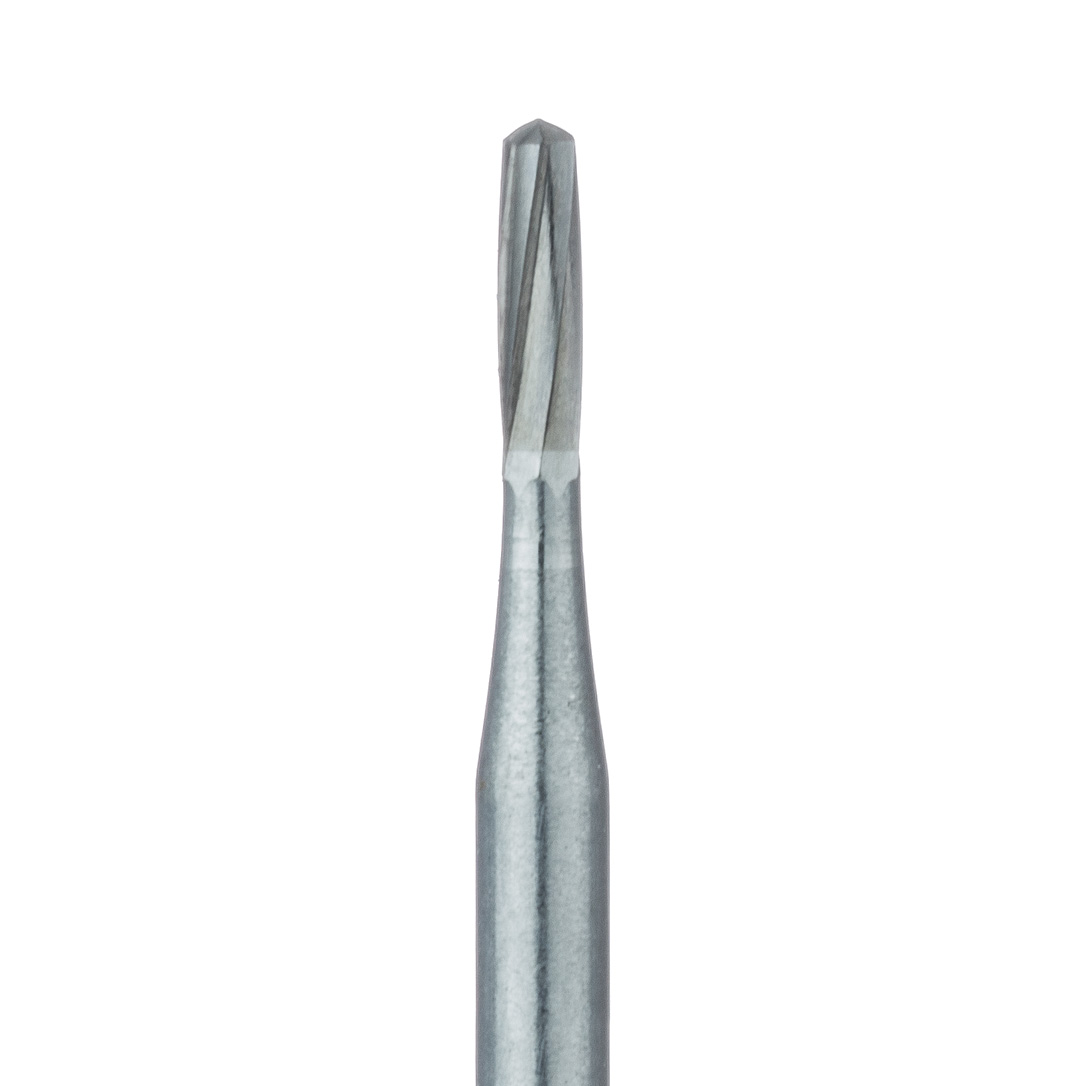
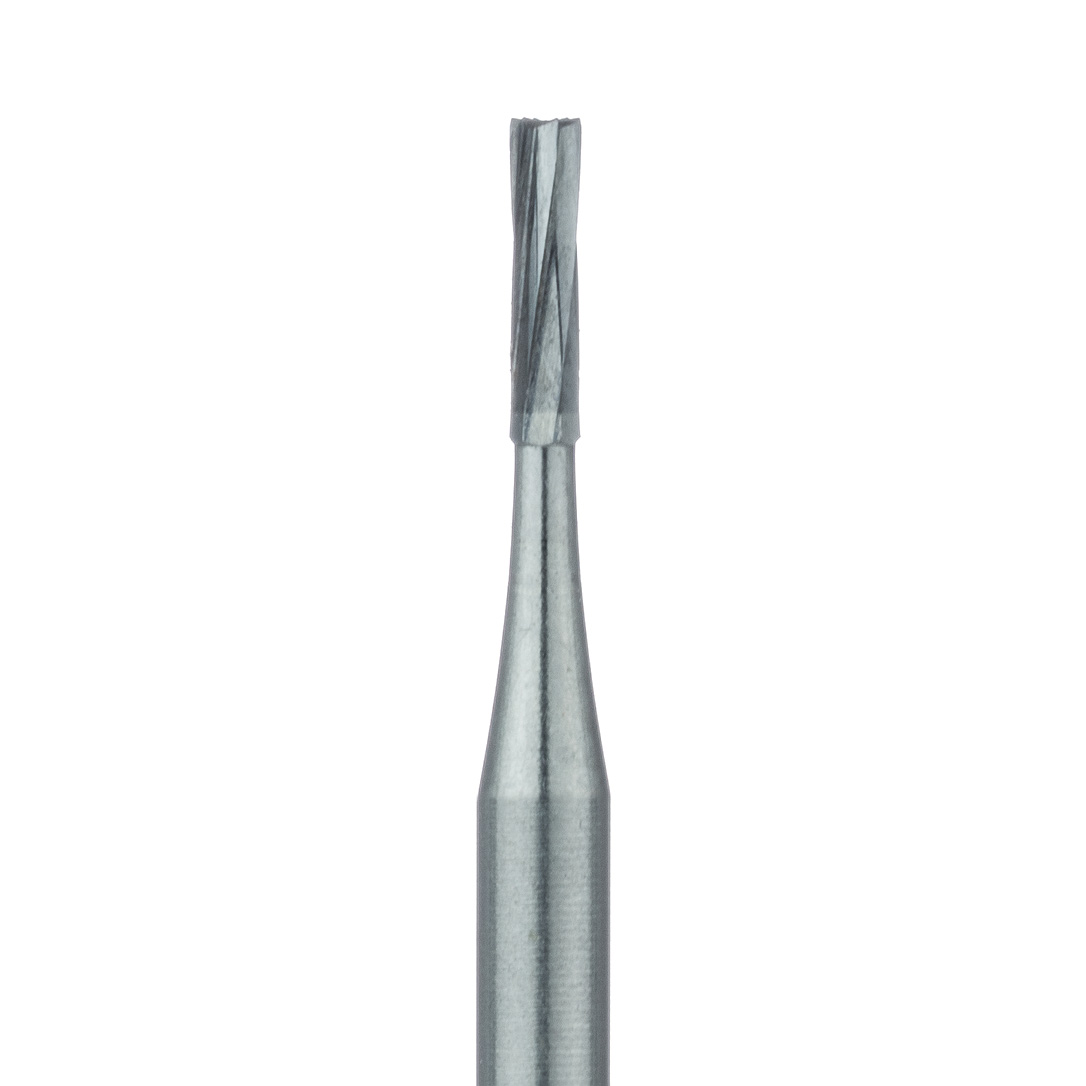
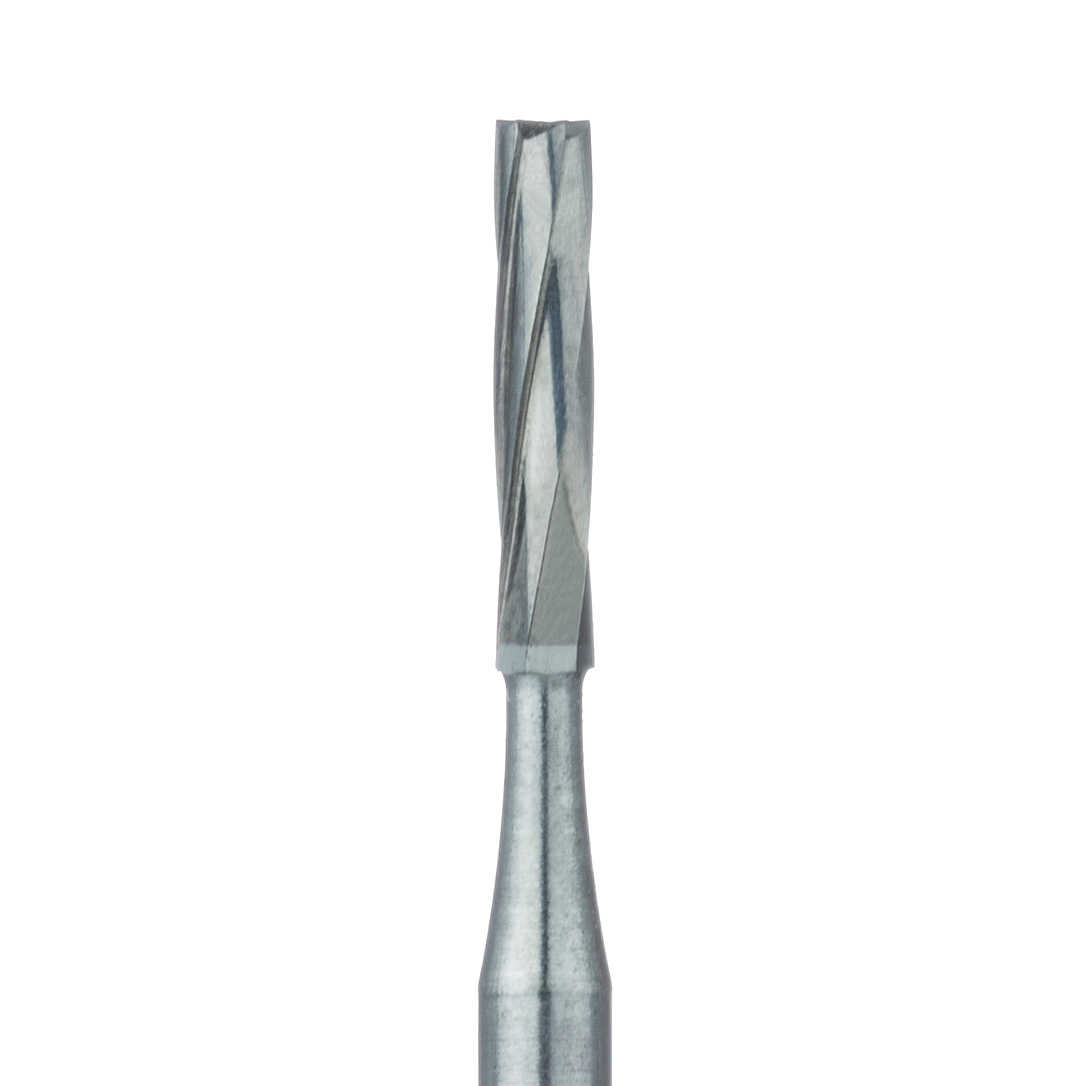
CARBIDE FISSURE BURS
Carbide instrument for precise segmentation of Feline molar and premolar multi-rooted teeth. The slender, cylindrical or tapered burs precisely separate the tooth into single-rooted segments beforehand to prevent subsequent root fracture during extraction.
Specialised Geometries: Pointed ends (as with the C21R) or extra-long working parts (as with the C21L) allow deep advancement precisely to the bifurcation (furcation) of the tooth roots without jamming.
Position the fissure bur at the furcation of multi-rooted teeth. Cleanly section the crown through to the interradicular space.
Carbide instrument
C21R.FG.010
Carbide instrument
C21.FG.008
Carbide instrument
C21L.FGL.010
Step 3
EMERGENCY ACCESS (OPTIONAL)
DIAMOND INSTRUMENTS
Fine grit diamonds are useful to achieve access to fractured or remained tooth roots in the depth. The gentle bone removal at high rotational speed and minimal pressure helps to avoid penetration of the nasal cavity and mandibular canal. Axial forces and bending should be avoided to minimize the risk of fractures of the bur.
Einsatz im Hochgeschwindigkeitsbereich von bis zu 300.000 U/min in der Turbine zur Aufbereitung von empfindlichen und gebrochenen Zahnwurzeln.
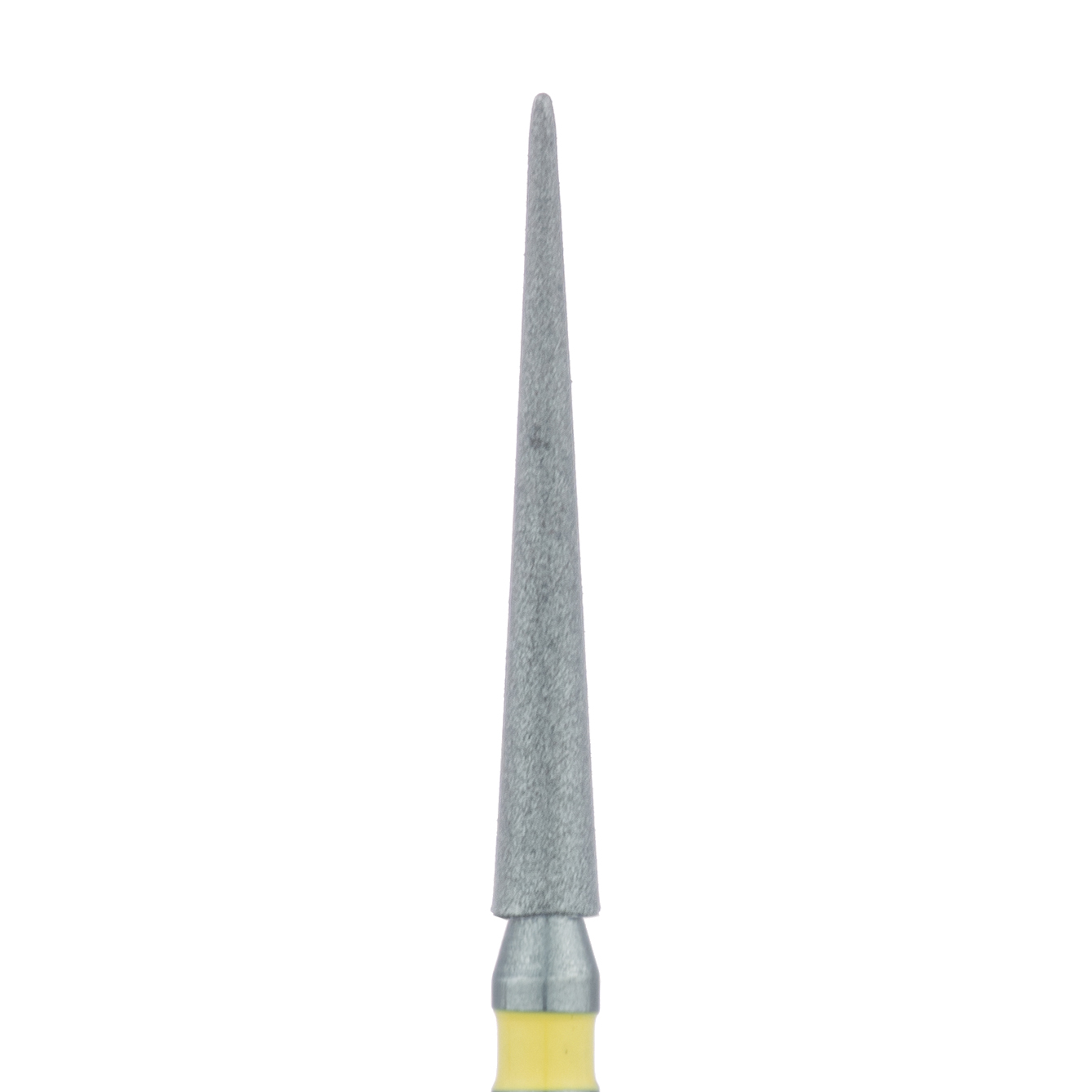
Diamond instrument
859LEF.FG.010
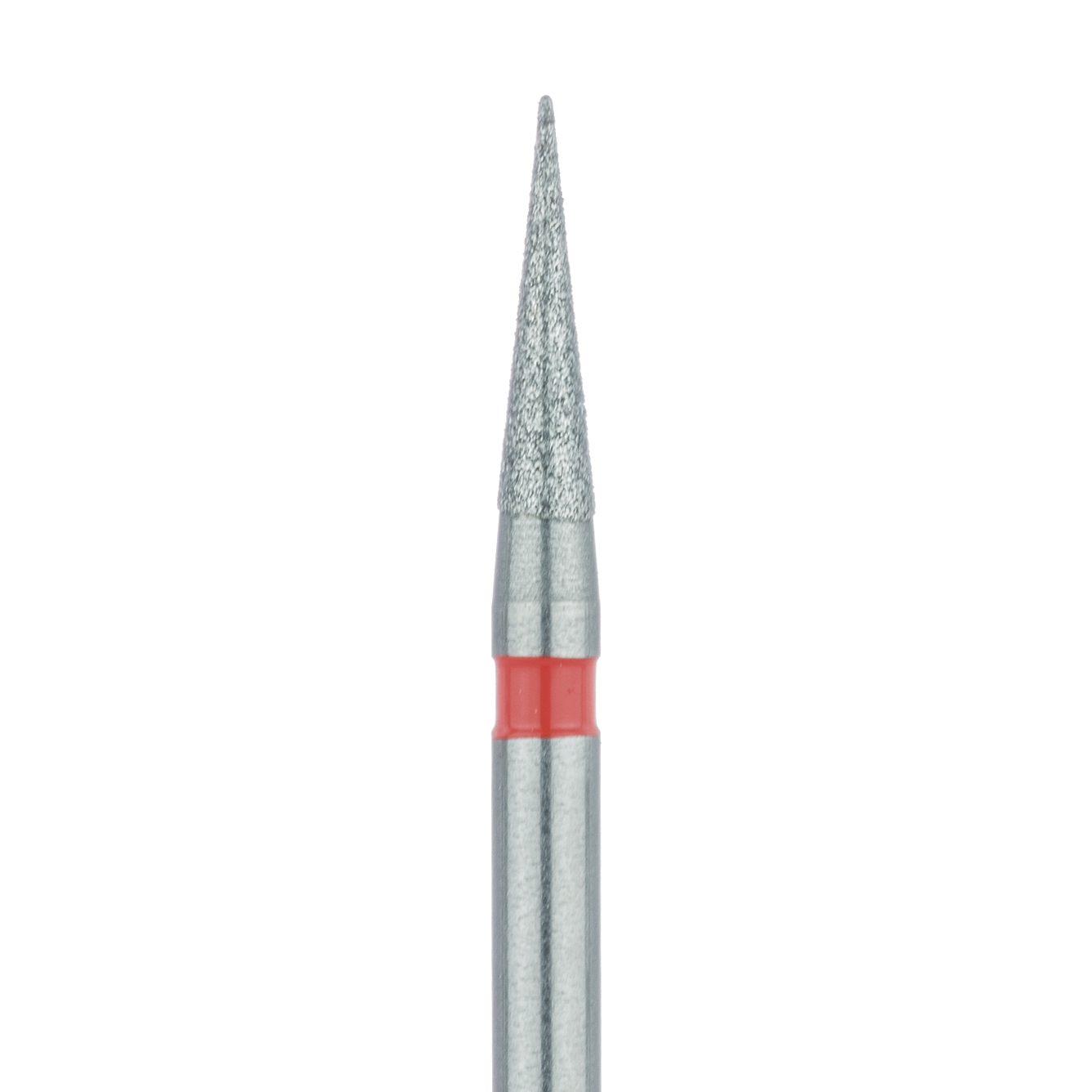
Diamond instrument
898F.FG.014